Cannabis consumption has become legal in many states for medical and recreational use. Yet the distinctive cannabis smell remains a concern in shared spaces, and for anyone seeking discretion.
But how can you smoke weed without leaving a smell inside? Read on to learn more!
Why Cannabis Smoke Smells So Strong
Terpenes give cannabis its characteristic aroma. These organic compounds exist in the same glands that produce THC and CBD.
Each strain contains different terpene profiles, creating unique scents from earthy to skunky to citrus.
When you smoke cannabis, terpenes release alongside smoke particles and volatile organic compounds. These particles attach to porous materials like fabric, carpet, upholstery, and even skin.
Research shows cannabis plants emit between 110 and 5,500 micrograms per cubic meter of BVOCs in growing facilities.
The compounds responsible include myrcene, pinene, limonene, and caryophyllene.
- Myrcene produces musky, earthy notes.
- Pinene smells like pine needles.
- Limonene creates citrus aromas.
- Caryophyllene offers peppery, spicy scents.
Strain Selection Matters
Not all cannabis produces equally strong odors. Strains high in caryophyllene or pinene typically smell milder. Myrcene-dominant strains create stronger, muskier aromas that linger longer.
Low-odor strains exist specifically bred for discrete consumption.
Ask dispensary staff about terpene profiles before purchasing. This simple step reduces the odor control challenge from the start.
How to Smoke Weed Inside Without Leaving a Smell
Choose Your Location Wisely
- Smoke in rooms with hard surfaces rather than carpeted areas.
- Bathrooms work well because tile and porcelain don’t absorb odors like fabric.
- Basements with concrete floors and minimal textiles also limit absorption.
- Position yourself near windows or external vents. Direct airflow paths help smoke exit quickly rather than settling throughout your space.
Seal Entry Points
- Place a damp towel at the bottom of doors. This prevents smoke from traveling to other rooms. The moisture helps trap particles attempting to escape through cracks.
- Close vents connected to central HVAC systems. You don’t want smoke distributed throughout your home via ductwork.
Create Ventilation
- Open windows before you start. Cross-ventilation works best when you create airflow from one side of the room to the other.
- Position a fan facing outward to push smoke outside actively.
- Bathroom exhaust fans provide built-in ventilation. Turn them on before smoking and leave them running for 20-30 minutes after finishing.
Active Odor Control While Smoking
The Hawaiian Hotbox Method
- Turn your shower to maximum heat without stepping in. Steam binds to smoke particles and helps carry them toward ventilation. This method works particularly well in bathrooms with exhaust fans.
- Crack a window or turn on the fan. The steam-smoke combination exits more readily than dry smoke alone.
DIY Sploof Filters
- A sploof filters exhaled smoke before it enters the air. Make one by stuffing dryer sheets into a cardboard tube. Blow smoke through the tube so dryer sheets trap particles and terpenes.
- Store-bought smoke filters work better than homemade versions. They use activated charcoal instead of dryer sheets. Activated charcoal absorbs volatile organic compounds more effectively.
Direct Smoke Outside
Blow smoke directly out windows rather than generally toward them. Use a fan to create positive pressure pushing air outward. Position the fan behind you to blow smoke away from the room and through the open window.
This prevents smoke from swirling back into living spaces. The goal is one-way airflow: inside to outside only.
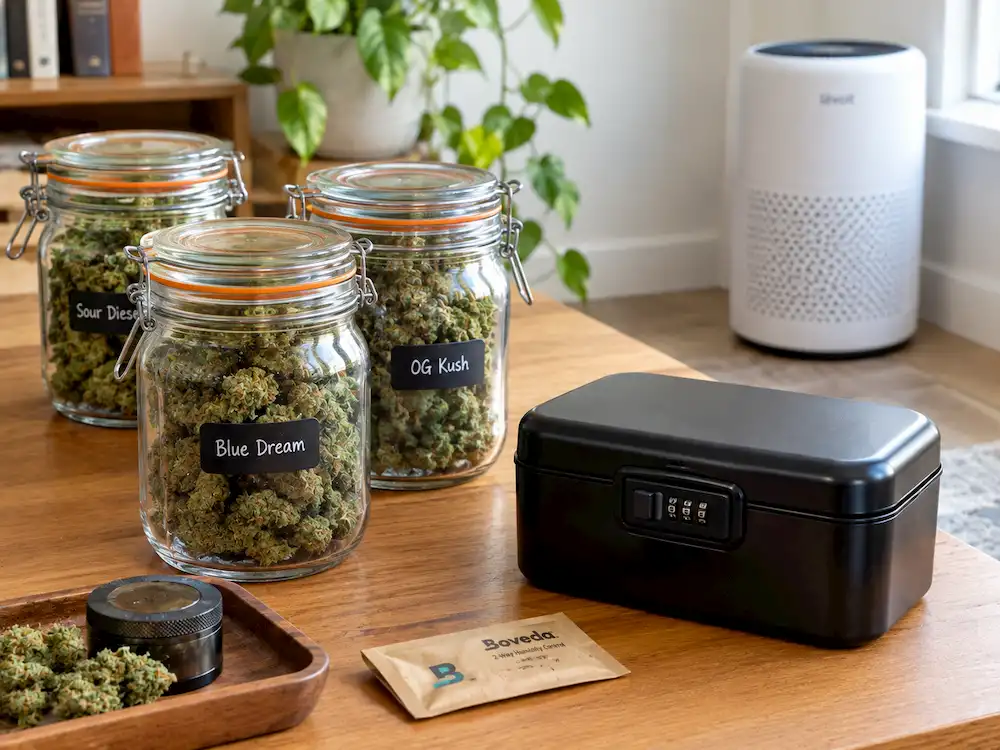
Air Purification Technology
HEPA and Activated Carbon Filters
Effective cannabis odor removal requires both HEPA and activated carbon filters. HEPA filters capture fine smoke particles as small as 0.3 micrometers.
Air purifiers with HEPA filtration remove particulate matter from the air.
Activated carbon handles the odor component. Understanding how activated carbon filters work explains why they’re essential for cannabis smoke.
The porous carbon surface adsorbs volatile organic compounds through a process different from absorption.
Placement and Operation
Place air purifiers in the smoking room before you begin. Run them continuously during and after smoking sessions. Most units need 20-30 minutes of operation after smoking stops to clear residual particles.
Position purifiers where they can draw in air freely. Don’t place them in corners or against walls where airflow becomes restricted.
Filter Maintenance
Replace activated carbon filters every 3-6 months with regular cannabis smoke exposure.
HEPA filters last longer but check manufacturer recommendations. Saturated carbon filters lose effectiveness and won’t remove odors properly.
Post-Smoking Cleanup
Immediate Surface Treatment
Wipe hard surfaces with white vinegar solution. Mix one part vinegar with two parts water. Spray on countertops, tables, and other non-porous surfaces where smoke particles settle.
Don’t skip this step. Terpenes adhere to surfaces and continue releasing odor for hours after smoking.
Fabric and Textile Care
Wash removable fabrics immediately. Smoke particles penetrate curtains, bedding, throw pillows, and clothing. Regular laundering prevents odor accumulation.
Steam clean upholstered furniture and carpets weekly if you smoke indoors regularly. Steam heat helps release trapped terpenes from fabric fibers.
Odor-Neutralizing Sprays
Use commercial odor eliminators designed for smoke removal. Products like Ozium work differently than air fresheners. They chemically neutralize odor molecules rather than masking them.
Avoid overusing scented products. Layering multiple fragrances creates suspicious smell combinations. One light application of a quality odor eliminator works better than multiple products.
Alternative Consumption Methods
Vaporizers Produce Less Odor
Vaporizers heat cannabis below combustion temperatures. This releases cannabinoids without creating smoke. Less combustion means fewer odor-causing compounds enter the air.
Dry herb vaporizers still produce some smell but significantly less than smoking. The odor also dissipates faster because fewer particles stick to surfaces.
Concentrates and Cartridges
Cannabis oil cartridges produce minimal odor compared to flower. The vapor contains fewer terpenes and clears from air quickly. This method offers the most discrete consumption option.
Temperature settings affect odor production. Lower temperatures create less visible vapor and weaker smells.
Storage Solutions
Airtight Containers
Store cannabis in glass jars with rubber seal lids. Mason jars work perfectly for this purpose. Glass doesn’t absorb odors and rubber gaskets create true airtight seals.
Never use plastic bags. Plastic isn’t truly airtight and actually absorbs cannabis odors over time. This makes the storage container itself smell.
Smell-Proof Bags
Carbon-lined stash bags contain odors effectively. The activated carbon layer traps escaping terpenes. These bags work well for travel or temporary storage.
Keep bags in cool, dark locations. Heat and light degrade terpenes, which can intensify aroma.
Deep Cleaning for Persistent Odors
Carpet and Upholstery
Sprinkle baking soda liberally over carpets and upholstered furniture. Let it sit overnight or up to 24 hours. Baking soda absorbs odor molecules from fabric fibers. Vacuum thoroughly afterward.
Rent a carpet shampooer for deep cleaning. Add enzymatic odor eliminators to the cleaning solution for better results.
Wall and Ceiling
Wash walls and ceilings with sugar soap or TSP substitute. Smoke residue accumulates on all surfaces, including vertical ones. Wipe from top to bottom to avoid streaking.
For severe cases, prime and repaint. Paint encapsulates odors when surface cleaning fails. Use odor-blocking primer designed for smoke damage.
HVAC System
Replace your HVAC filters if smoke entered your ventilation system. Dirty filters harbor odors and redistribute them throughout your home.
Consider professional duct cleaning for persistent whole-house odors. Terpenes can settle in ductwork and continue releasing smell for months.
Masking Techniques
Incense and Essential Oils
Burn incense after smoking, not during. Nag Champa works well for cannabis odor because its strong scent profile effectively masks terpenes.
The incense smoke also creates visual cover for any lingering cannabis smoke.
Diffuse essential oils like eucalyptus, peppermint, or tea tree. These strong scents help neutralize cannabis odors naturally.
Candles
Light scented candles designed for odor elimination rather than decoration. Brands like Cannabolish create candles specifically formulated to combat cannabis smells.
Avoid cheap candles that just add fragrance. Quality odor-eliminating candles contain compounds that neutralize smell molecules.
Legal and Social Considerations
Even where cannabis is legal, landlords can prohibit smoking in rental properties. Lease agreements typically include smoke-free clauses that cover all types of smoking. Violating these terms risks eviction.
Neighbors’ exposure to secondhand smoke creates liability issues. Smoke that drifts into adjacent units can trigger complaints. Some jurisdictions allow neighbors to sue for nuisance when smoke crosses property boundaries.
If you rent, consider edibles or tinctures instead. These eliminate odor concerns entirely while still allowing legal cannabis use.
Science
Cannabis smoke contains more than just terpenes. Combustion produces carbon monoxide, particulate matter, and other air pollutants.
A study found that indoor concentration enhancements from cannabis smoking ranged from 1.5 to more than 3 times baseline levels for light aromatics and sesquiterpenoids.
Vaping produced comparable or higher concentration enhancements up to 4 times baseline for monoterpenoids. This challenges the assumption that vaping always produces less indoor pollution than smoking.
Thirdhand smoke effects occur when residual smoke compounds transfer to other spaces. Semivolatile species with higher affinity for clothing transport more efficiently.
You carry odors into other rooms and buildings even after the smoking session ends.
Health
While cannabis terpene smell itself doesn’t directly harm health, smoke exposure does. Any type of smoke irritates lungs and airways.
People with asthma, allergies, or respiratory conditions face increased risk from secondhand cannabis smoke.
Prolonged exposure to indoor smoke of any kind affects air quality. Maintaining clean indoor air protects everyone in your household. Learn more about indoor air quality statistics to understand broader impacts.
Children and pets are particularly vulnerable to smoke exposure.
Their smaller body sizes and faster breathing rates mean they inhale proportionally more pollutants.
Long-Term Strategies
Establish a Dedicated Smoking Space
Designate one room or outdoor area for cannabis use only. This contains odors to a single space rather than spreading them throughout your home.
Choose rooms with windows, hard floors, and minimal fabric furnishings.
Treat this space with regular deep cleaning. Monthly carpet shampooing and wall washing maintain freshness.
Invest in Quality Air Treatment
A quality air purifier designed for smoke removal costs $200-500 initially. This one-time investment provides ongoing odor control for years. Calculate the cost of constantly replacing air fresheners and cleaning products.
Professional units with commercial-grade activated carbon filters offer superior performance. These systems continuously clean air rather than temporarily masking odors.
Maintain Consistency
Follow your chosen prevention methods every single time. Skipping ventilation steps “just this once” allows odors to build up. Consistency keeps smells from accumulating in fabrics and surfaces.
Create a checklist: towel under door, window open, fan running, air purifier on. Complete each step before and after smoking.
FAQs
What removes cannabis smoke smell fastest?
Ventilation combined with activated carbon filtration removes smell fastest. Open windows, use fans, and run an air purifier with carbon filters.
Do dehumidifiers remove cannabis odor?
No, dehumidifiers only remove moisture from air. They lack filtration systems necessary to capture smoke particles or absorb odors. You need air purifiers with HEPA and activated carbon filters for odor removal.
How long does cannabis smell linger indoors?
Cannabis odor lingers anywhere from a few hours to several days depending on surfaces present. Porous materials like carpet, fabric, and wood retain smell longer. Non-porous surfaces like tile and glass lose scent more quickly.
Can vinegar remove cannabis smoke smell?
Yes, white vinegar neutralizes odors on hard surfaces. Mix equal parts vinegar and water. Spray on counters, tables, and walls where smoke settled. Vinegar’s acidity breaks down odor-causing compounds. It doesn’t work on fabrics without washing.
Will smoking in the bathroom with shower running work?
The Hawaiian Hotbox method reduces odor by using steam to bind smoke particles. Combined with an exhaust fan and open window, this technique minimizes smell effectively.
Are smell-proof bags actually smell-proof?
Quality smell-proof bags with carbon lining effectively contain cannabis odors. They work best for storage rather than fresh flower. Even good bags eventually allow some smell to escape over extended periods.
Does vaping cannabis eliminate smell completely?
Vaping produces less odor than smoking but doesn’t eliminate smell entirely. Vapor contains fewer terpenes and dissipates faster than smoke.
Sources
- Tandfonline.com, “Dominant volatile organic compounds (VOCs) measured at four Cannabis growing facilities,” 2019
https://www.tandfonline.com/doi/full/10.1080/10962247.2019.1654038 - Leafly, “How to get rid of the smell of marijuana inside,” August 3, 2022
https://www.leafly.com/news/cannabis-101/how-to-get-rid-of-cannabis-smell-in-your-house - Recovery.com, “Behind Closed Doors: 5 Methods Teens Use to Mask the Smell of Marijuana,” December 11, 2025
https://recovery.com/resources/behind-closed-doors-5-methods-teens-use-to-mask-the-smell-of-marijuana/ - Alen, “Air Purifiers for Weed Smoke,” July 14, 2025
https://alen.com/blogs/health-benefits/air-purifier-for-weed-smoke - ScienceDirect, “Measurement of volatile organic compounds from indoor cannabis smoking and vaping,” March 1, 2024
https://www.sciencedirect.com/science/article/pii/S2950362024000031 - Lyphe Clinic, “How to Get Rid of the Smell of Weed,” July 7, 2025
https://lyphe.com/get-rid-of-weed-smell