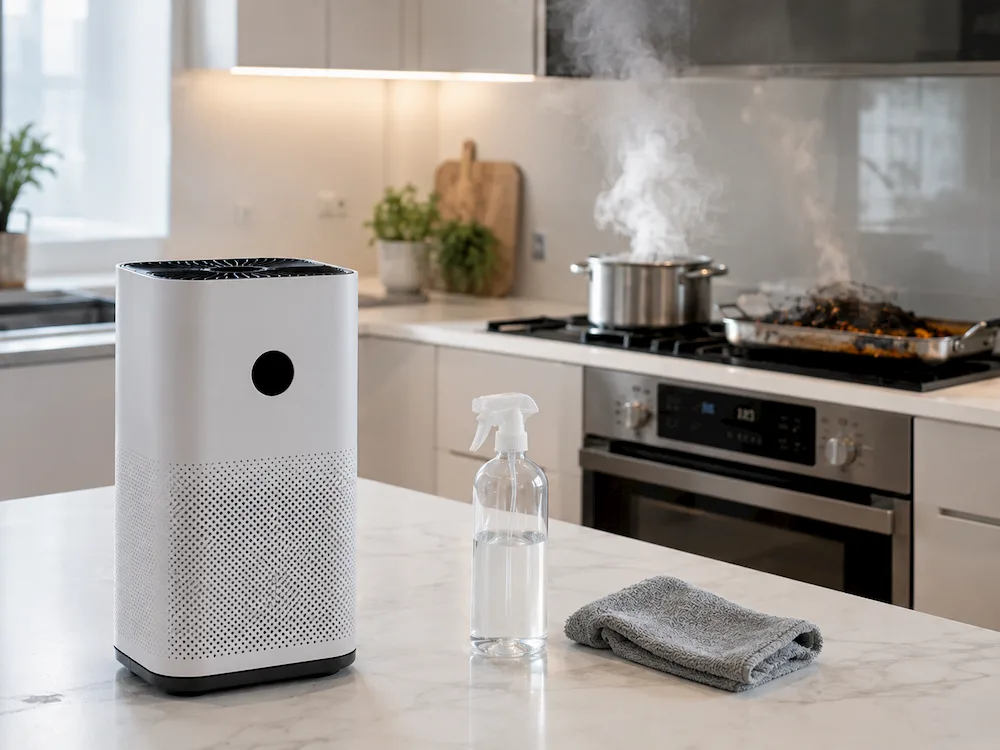
Burnt food creates a stubborn smell that clings to every surface in your kitchen. The odor spreads quickly and settles into fabrics, walls, and furniture. You need to take fast action to prevent the smell from becoming permanent.
The key to removing burnt smells from your house is acting quickly and targeting multiple sources at once. We show you eight proven methods that eliminate burnt odors.
Remove the Source Immediately
Burnt materials continue releasing odor particles as long as they stay in your home. Quick removal prevents the smell from spreading further.
Dispose of Burnt Food Properly
Remove burnt food from your home within minutes of the incident.
Place charred items in a plastic bag and seal it tightly. Take the bag straight to your outdoor trash can, not your kitchen garbage.
Wait until burnt cookware cools before handling it. Hot items can melt through plastic bags or burn your skin. The faster you remove the source, the less time odors have to penetrate your home’s surfaces.
Clean Cookware Right Away
- Burnt pots and pans release odors for hours after cooking stops.
- Fill affected cookware with hot water and dish soap immediately. Let it soak for several hours or overnight to loosen burnt residue.
- For stubborn burns, create a paste with baking soda and water.
- Spread the paste over burnt areas and let it sit for 30 minutes before scrubbing.
- Never use abrasive scrubbers on nonstick pans, as they damage the coating and make future burning more likely.
Ventilate Your Home Fast
Fresh air dilutes smoke particles and carries them outside. Proper ventilation is your first defense against lingering burnt smells.
Cross-Ventilation
- Open windows on opposite sides of your home to create airflow. This cross-ventilation pulls smoke out faster than opening windows on one side only.
- Close windows and doors in rooms you want to protect from the smell.
- Position portable fans in doorways facing outward. This forces smoky air outside while fresh air enters through other openings.
- Keep windows open for at least two hours after the incident, longer for severe burns.
Exhaust Fans
Turn on your kitchen exhaust fan immediately when burning occurs. Exhaust fans pull smoke and odor particles directly outside before they spread through your home.
If you don’t have an exhaust fan, ceiling fans work by pushing air toward open windows.
Run bathroom exhaust fans to create additional air outlets. The more extraction points you have, the faster odors clear.
Your HVAC system can help by running fans on the continuous setting to filter air, but only after you’ve removed the source.
Absorb Odors With Natural Deodorizers
Natural absorbents trap odor molecules and neutralize them. These methods work best when combined with ventilation.
Baking Soda
Baking soda absorbs odors through a chemical reaction with acidic smell molecules. Sprinkle generous amounts on countertops, carpets, and other surfaces exposed to smoke. Let it sit overnight before vacuuming.
For severe odors, place small open containers of baking soda throughout affected rooms. Replace the baking soda after 24 hours if smells persist. Keep containers away from children and pets.
Activated Charcoal
Activated charcoal has millions of tiny pores that trap odor molecules. Place charcoal bags near the burn source and in rooms where smells have spread. Charcoal works continuously for up to two months before needing replacement.
Charcoal requires no maintenance and produces no scent of its own. This makes it excellent for ongoing odor control after initial cleaning. You can reactivate charcoal bags by placing them in direct sunlight for a few hours.
Coffee Grounds
Coffee grounds absorb and mask odors with their strong natural aroma. Spread fresh or used grounds in a shallow bowl and place near the burn area. Dry used grounds first by spreading them on a baking sheet in a 250-degree oven.
Coffee grounds work faster than baking soda but need replacement every 12-24 hours. This method works best for moderately burnt smells, not severe smoke damage.
Clean All Surfaces Thoroughly
Smoke particles settle on every surface and continue releasing odors. Deep cleaning removes these particles permanently.
Wipe Down Hard Surfaces
- Mix one cup white vinegar with one cup water in a spray bottle.
- Add 10-15 drops of lemon or grapefruit essential oil for extra deodorizing power.
- Spray this solution on countertops, cabinets, stovetops, and appliances.
- Wipe surfaces with microfiber cloths, which trap particles better than paper towels.
- Clean switch plates, cabinet handles, and other small surfaces where smoke settles.
- Rinse your cloth frequently to avoid spreading smoke residue.
Scrub Walls and Ceilings
- Walls and ceilings absorb smoke odors that regular wiping can’t remove.
- Fill a bucket with hot water, dish soap, and a half cup of baking soda.
- Scrub walls with a sponge or mop, working from top to bottom.
- Change your cleaning water frequently as it becomes saturated with smoke residue.
- For stubborn smoke stains, use a solution of equal parts water and white vinegar.
- Paint can absorb smoke smells, so you may need to repaint after cleaning if odors persist.
Wash Fabrics That Absorbed Smoke
Soft surfaces trap smoke particles in their fibers. Washing removes these particles and their associated odors.
Launder Linens and Curtains
Fill a sink with warm water and one cup white vinegar. Soak curtains, tablecloths, towels, and other washable fabrics for one hour. This vinegar soak loosens smoke particles before washing.
Wash fabrics according to care labels after soaking. Smell items before drying them. If the odor remains, wash again. Never put smelly fabrics in the dryer, as heat sets odors permanently into fibers.
Steam Clean Upholstery
Couches, chairs, and other upholstered furniture absorb significant amounts of smoke. Regular vacuuming removes surface particles but misses embedded odors.
Rent or purchase a steam cleaner with an upholstery attachment to deep clean furniture.
Steam cleaning forces hot water and cleaning solution deep into fabric fibers. This process lifts smoke particles and neutralizes odors at their source.
Allow furniture to dry completely before using it again. Reducing dust buildup between cleanings helps fabrics stay fresher longer.
Run Air Purifiers With Carbon Filters
Air purifiers actively remove smoke particles and odor molecules from indoor air. They work continuously to improve air quality.
Position Units Near Burn Area
Place air purifiers in rooms where burning occurred and adjacent spaces where smoke spread. Units work most effectively when positioned 3-5 feet away from walls with nothing blocking airflow.
Quality air purifiers with activated carbon filters specifically target odor molecules.
Run multiple units simultaneously if you have them. More purifiers mean faster odor removal. Avoid units with ionizers, as they can produce ozone which irritates airways.
Keep Running Continuously
Air purifiers need hours or days to fully clear burnt smells. Run them 24 hours a day until odors disappear completely. Change filters according to manufacturer guidelines, more frequently if you’ve had severe smoke exposure.
PM2.5 particles from burnt food can remain airborne for days. These microscopic particles carry odors and pose health risks. Continuous air purification captures these particles and prevents them from resettling on surfaces.
Simmer Natural Fresheners
Simmering fragrant ingredients masks remaining odors while you work on removal. These methods provide immediate relief from unpleasant smells.
Cinnamon and Citrus
Combine a pot of water with 3-4 cinnamon sticks and the peels from one lemon or orange. Simmer on low heat for 30 minutes. This creates a pleasant aroma that overpowers burnt smells temporarily.
This method masks odors rather than removing them. Use it alongside other cleaning methods, not as your only solution. Add more water as needed to prevent the pot from boiling dry.
Vinegar Solution
Boil equal parts water and white vinegar in a pot on your stove. The vinegar steam neutralizes airborne odor molecules. This works particularly well for greasy burnt smells from overheated oil.
Boil for 10-15 minutes with windows open. The vinegar smell dissipates quickly once you stop boiling, taking burnt odors with it.
When to Consider Professional Help
Some burnt smell situations exceed what household cleaning can handle.
Professional services become necessary when odors persist after thorough cleaning or when smoke damage is extensive.
Consider professionals if you experience any of these situations: smoke from electrical fires, heavy smoke damage affecting multiple rooms, smoke penetration into walls or subflooring, or health symptoms from smoke exposure.
Professional cleaners have industrial equipment like thermal foggers and ozone generators that neutralize severe odors.
Ozone generators break down odor molecules but must be used in unoccupied spaces.
Never stay in your home while an ozone generator runs, as ozone irritates lungs. Ozone machines should only be operated by trained professionals.
FAQs
Do air purifiers help with burnt food smell?
Air purifiers with activated carbon filters effectively remove airborne burnt smell particles. They work continuously to clean air but don’t eliminate odors from surfaces. Combine air purification with surface cleaning for best results.
How long does it take to remove burnt smell from house?
Light burnt food smells clear within 2-3 hours with proper ventilation and surface cleaning. Moderate burns may take 12-24 hours with multiple cleaning methods. Severe smoke damage can persist for several days or weeks and may require professional cleaning or ozone treatment.
Can burnt smell make you sick?
Yes, smoke from burnt food contains harmful particles that irritate airways and lungs. People with asthma, respiratory conditions, or pregnant individuals face higher risks. Exposure causes coughing, shortness of breath, and headaches in severe cases.
Will burnt smell eventually go away on its own?
Burnt smells fade slowly without intervention but rarely disappear completely. Odor molecules settle into porous surfaces like drywall, carpet, and upholstery where they continue releasing smells for weeks or months. Active removal methods are necessary for complete elimination.
Does baking soda or vinegar work better for burnt smells?
Both work differently and complement each other. Baking soda absorbs and neutralizes acidic odor molecules on surfaces. Vinegar breaks down grease and smoke residue through its acidity. Use baking soda on dry surfaces and vinegar for wet cleaning solutions.