Apartments collect dust faster than houses due to limited ventilation, shared HVAC systems, and less control over air quality. You wipe surfaces clean and dust reappears within days. The constant battle feels exhausting.
The average American home accumulates 40 pounds of dust annually, with apartments facing even higher rates due to concentrated living spaces and restricted airflow. We provide 10 practical methods specifically designed for smaller spaces to significantly reduce dust levels in your apartment.
Why Apartments Get Dustier Than Houses?
Apartments face unique dust challenges that single-family homes don’t experience. Understanding these factors helps you target your cleaning efforts effectively.
Poor Ventilation Systems
Older apartment buildings often have heaters and air conditioning that create dry, stale air. Without adequate airflow, dust particles circulate repeatedly rather than being expelled.
Limited window placement compounds this problem. Many apartments have windows on only one side, making cross-ventilation impossible. Dust has nowhere to go except settle on surfaces.
Shared HVAC Filters
Multi-unit buildings typically share HVAC systems. Your neighbors’ dust, cooking particles, and other airborne contaminants circulate through shared ducts. You have no control over when building management changes filters or maintains the system.
This shared air circulation means dust builds up faster than in homes with independent HVAC systems. The dust you clean today may return tomorrow from other units.
How to Reduce Dust in Your Apartment: 10 Proven Methods
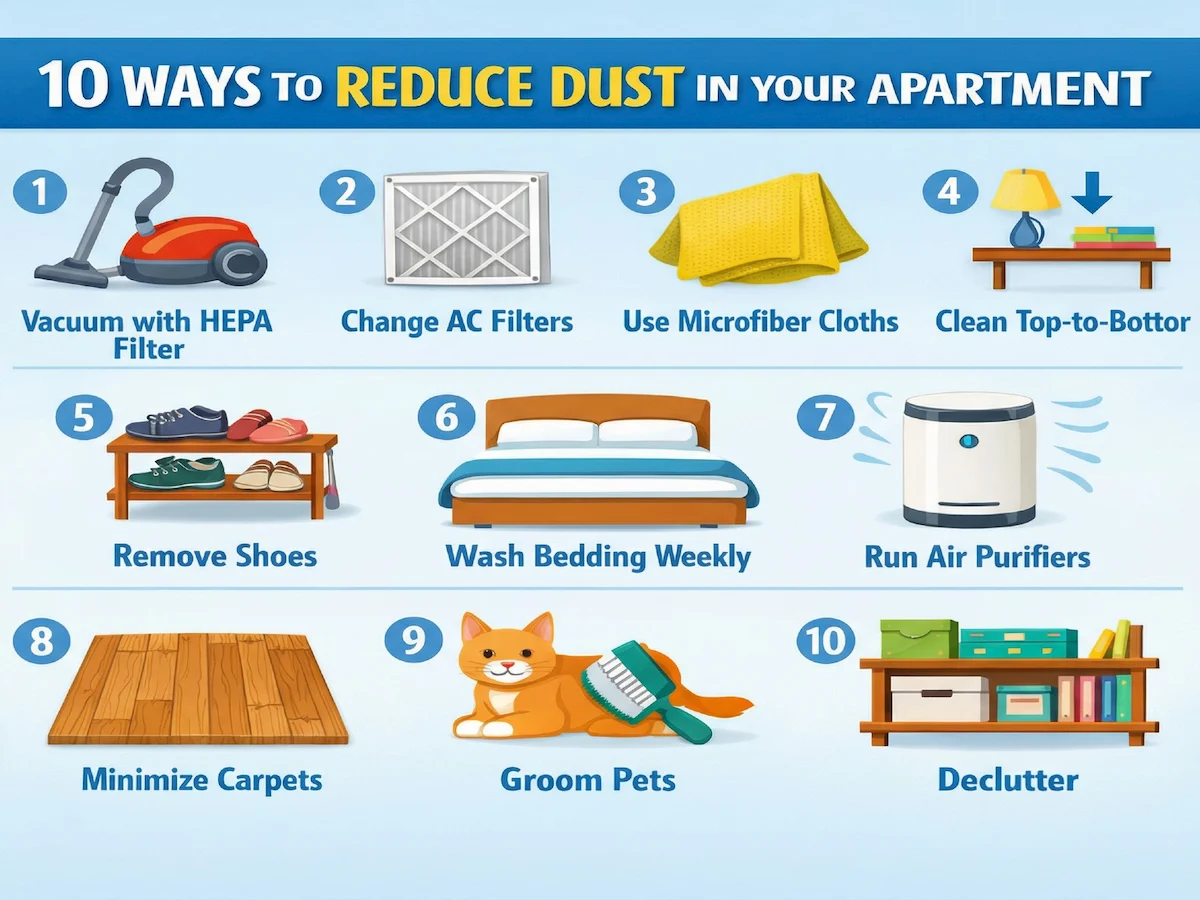
1. Vacuum With HEPA Filters Weekly
HEPA (high-efficiency particulate air) filters capture 99.97% of particles as small as 0.3 microns. Regular vacuums without HEPA filters blow fine dust back into the air while cleaning.
Best Vacuuming Schedule
Vacuum floors at least twice weekly in high-traffic areas. Move slowly to allow suction to pull dust from deep within carpet fibers and along baseboards. Carpets trap significant dust that gets released every time you walk across them.
For apartments with pets, vacuum 3-4 times weekly. Pet hair and dander contribute substantially to household dust accumulation.
Focus Areas for Apartments
Pay special attention to these dust-collecting hotspots: corners where walls meet floors, under furniture, along baseboards, behind electronics, inside closets, and entryways where outdoor dust enters. Use crevice tools and upholstery attachments to reach difficult areas.
Vacuum upholstered furniture weekly by lifting cushions to access trapped dust. Beat cushions outside first to release embedded particles before vacuuming.
2. Change AC Filters More Frequently
Clogged HVAC filters lose their dust-trapping ability. Instead of cleaning air, dirty filters blow accumulated dust throughout your apartment.
Filter Replacement Timeline
Replace filters every 30 days in apartments with pets or allergies. Standard replacement schedules recommend 90 days, but apartment conditions require more frequent changes.
Check filters monthly even if you don’t replace them. Dark gray or black filters need immediate replacement regardless of time since last change. Locate your AC filter and establish a regular inspection routine.
Upgrade Filter Quality
Higher-rated filters capture more dust particles. Switch from standard fiberglass filters to pleated electrostatic filters rated MERV 8-11. These trap smaller particles without restricting airflow significantly.
Electrostatic filters use static electricity to attract and hold dust particles. They cost more initially but provide better air quality and can be reused after cleaning.
3. Use Microfiber Cloths for Dusting
Feather dusters and dry rags move dust around rather than removing it. Microfiber cloths have an electrostatic charge that attracts and holds dust particles.
Wet vs Dry Dusting
Damp microfiber cloths capture dust most effectively. Soak the cloth in water, wring it thoroughly, then wipe surfaces. The moisture makes dust stick to the cloth instead of becoming airborne.
Dry microfiber works for electronics and surfaces that shouldn’t get wet. The static charge still captures dust better than traditional dusters.
4. Top-to-Bottom Cleaning Order
Always dust from highest surfaces downward. Start with ceiling fans and light fixtures, move to shelves and furniture tops, then finish with baseboards. This prevents clean surfaces from collecting dust knocked down from above.
Rinse your cloth frequently during cleaning. A dust-saturated cloth simply spreads particles rather than removing them.
5. Remove Shoes at the Door
Shoes track dirt, pollen, and outdoor dust into your apartment. A no-shoes policy cuts indoor dust significantly.
Set Up a Shoe Station
Place a shoe rack immediately inside or outside your door. Keep indoor slippers or flip-flops available for easy swapping.
Establishing this habit takes time but yields dramatic dust reduction. Guests may resist initially, so explain your dust-reduction efforts and provide disposable shoe covers as an alternative.
Use Doormats Effectively
Place doormats both outside and inside your entrance. Outdoor mats should have stiff bristles that scrape dirt from shoe soles. Indoor mats trap particles that outdoor mats miss.
Shake out or vacuum doormats weekly. Otherwise, they become dust sources rather than dust catchers.
6. Wash Bedding Weekly
Beds harbor dust mites, dead skin cells, and hair. These components contribute significantly to bedroom dust levels.
Kill Dust Mites With Hot Water
Wash sheets, pillowcases, and blankets in hot water (at least 130°F) weekly. Hot water kills dust mites that cold or warm water leaves alive.
Dry bedding completely in a hot dryer. Damp bedding creates humidity that dust mites love. Shake out pillows and duvets weekly to prevent dust buildup between washes.
Use Protective Covers
Encase mattresses and pillows in dust mite-proof covers. These protective barriers prevent mites from penetrating bedding while blocking allergens from escaping.
Replace old mattresses if possible. Mattresses accumulate thousands of dust mites over years of use.
7. Run Air Purifiers Continuously
Air purifiers actively remove dust particles from indoor air before they settle on surfaces. They work particularly well in apartments with poor natural ventilation.
Choose the Right Size Unit
Match air purifier capacity to your room size. Check the unit’s recommended coverage area, typically measured in square feet. Undersized purifiers can’t process enough air to make a difference.
Quality air purifiers with true HEPA filters provide the best dust reduction. Avoid ionizers that produce ozone as a byproduct.
Placement Tips
Place air purifiers in bedrooms and living rooms where you spend the most time. Place units 3-5 feet from walls with nothing blocking airflow. Run purifiers continuously rather than intermittently for maximum dust reduction.
Turn units on while cleaning. They’ll capture airborne dust particles stirred up during vacuuming and dusting, preventing them from resettling on clean surfaces.
8. Minimize Carpet and Rugs
Carpets act as dust magnets, trapping particles deep in fibers. Hard flooring remains cleaner and requires less maintenance.
Hard Flooring Benefits
If your lease allows, request hard flooring or install temporary solutions like vinyl planks. Hard surfaces don’t trap dust like carpet does. A single wipe removes dust that would require multiple vacuum passes on carpet.
Hard floors also show dust more clearly, prompting faster cleaning before buildup occurs.
Required Carpet Coverage
Many rental leases require 80% floor coverage with area rugs or carpeting for noise reduction. If you must have rugs, choose ones you can take outside for beating. This removes embedded dust better than vacuuming alone.
Wash small area rugs monthly in hot water. Larger rugs need professional cleaning every 6-12 months.
9. Declutter High-Dust Areas
Every item in your apartment provides a surface for dust to settle. Fewer items mean fewer surfaces to clean and less dust accumulation overall.
Shelving and Display Items
Knick-knacks collect dust rapidly, especially on high shelves where they’re hard to reach. Adopt a minimalist approach by displaying fewer items or rotating decorations seasonally.
Store items in closed cabinets rather than on open shelves. This protects them from dust while reducing cleaning time.
Under-Bed Storage Solutions
Under-bed storage is the worst spot for attracting dust. If you must use this space, store items in sealed plastic containers. Pull containers out quarterly to vacuum underneath.
Raise your bed frame to allow better air circulation underneath. This reduces dust accumulation and makes cleaning easier.
10. Keep Windows Closed During High Pollen
Fresh air seems healthy, but open windows bring outdoor dust, pollen, and pollutants inside. These particles settle on surfaces throughout your apartment.
During high pollen days, keep windows closed and run air purifiers instead. Check local pollen forecasts to time your window opening strategically. Open windows on low-pollen days to ventilate without introducing excessive outdoor dust.
Install window screens if your apartment doesn’t have them. Fiberglass screens trap dust while still allowing some airflow. Clean window tracks monthly to prevent dust buildup around openings.
FAQs
Why is my apartment so dusty no matter how much I clean?
Shared HVAC systems, poor ventilation, and limited control over building maintenance cause persistent dust in apartments. Your cleaning removes surface dust, but the underlying sources keep producing more. Focus on source control by changing filters frequently, using air purifiers, and removing shoes at the door.
How often should I vacuum my apartment to reduce dust?
Vacuum high-traffic areas at least twice weekly using a HEPA filter vacuum. Apartments with pets need 3-4 weekly vacuuming sessions. Move slowly during vacuuming to allow proper suction time for embedded dust particles in carpet fibers and baseboards.
Do air purifiers help reduce apartment dust?
Yes, air purifiers with HEPA filters capture airborne dust particles before they settle on surfaces. Run them continuously in bedrooms and living rooms for best results. Air purifiers work especially well in apartments with poor ventilation where dust recirculates constantly through the space.
Can I refuse to have carpet in my apartment?
Lease terms typically require carpet or area rugs covering 80% of floors for noise reduction. You may be able to negotiate hard flooring with proof of adequate sound insulation, but landlords aren’t required to accommodate this request unless you have documented medical needs.
What’s the best way to clean dust from apartment walls?
Use a microfiber mop or cloth dampened with water and a small amount of all-purpose cleaner. Work from top to bottom in sections. For textured walls, use a barely damp cloth to avoid water damage. Clean walls quarterly to prevent thick dust layers from forming.
Should I dust or vacuum first in my apartment?
Always dust surfaces before vacuuming floors. Dusting knocks particles onto floors, which your vacuum then captures. Vacuuming first means you’ll need to vacuum again after dusting. Run an air purifier during cleaning to catch airborne particles before they resettle.
Breathe easy,
Michael