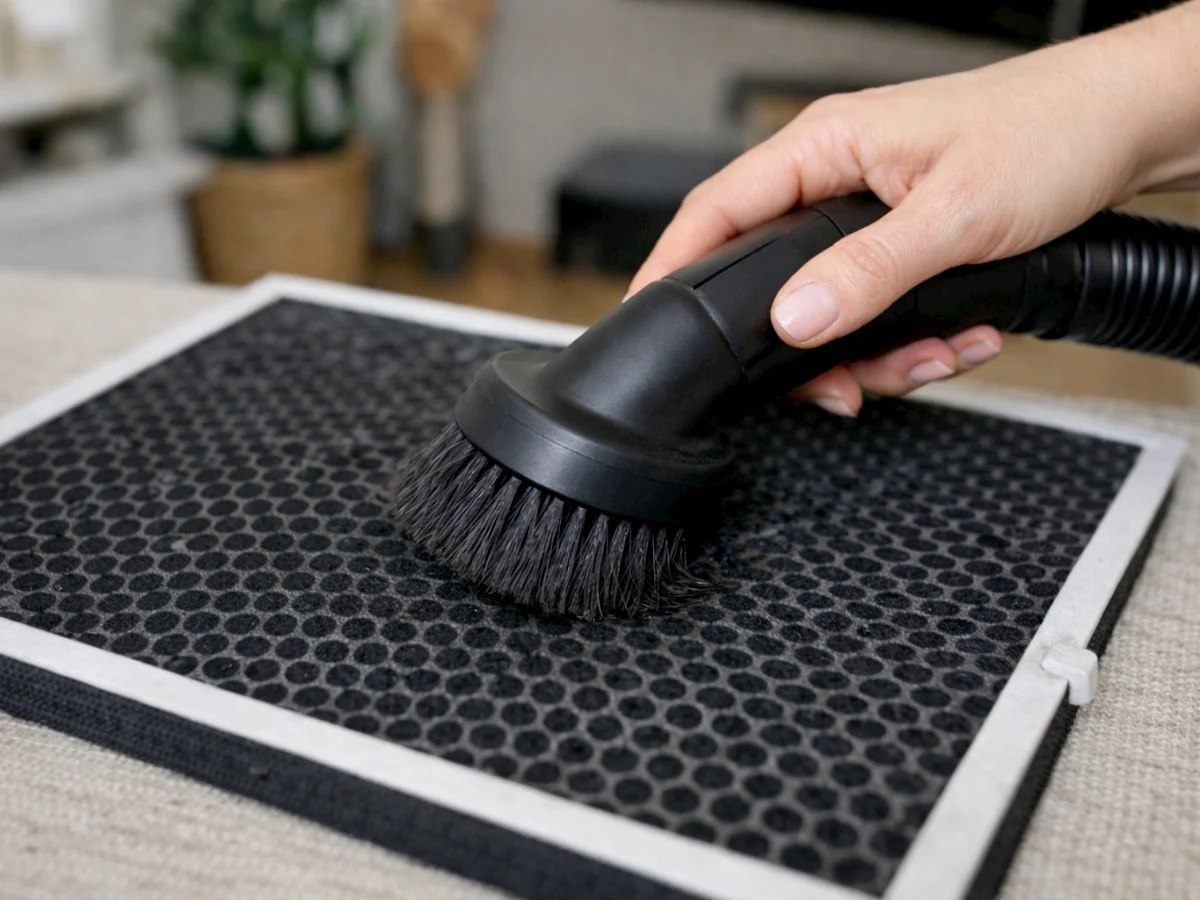
You can remove surface dust from an activated carbon filter, but you cannot clean out the trapped gases and odors that fill its pores. Once carbon becomes saturated with VOCs and odor molecules, replacement is the only solution that restores full performance.
That said, regular surface maintenance extends filter life by 1-2 months. Vacuuming off accumulated dust prevents airflow restriction and helps your carbon filter work longer before saturation.
We explain what cleaning and activated carbon air filter can accomplish, proper techniques that won’t damage the filter, and when you need to stop cleaning and buy a replacement.
Can You Actually Clean a Carbon Filter?
The answer depends on what you mean by “clean.” You can remove visible dirt, but you cannot restore the filter’s ability to trap gases and odors.
Why Carbon Filters Can’t Be Truly Cleaned
Activated carbon filtration relies on a physical process called adsorption and not absorption! Understanding this helps explain why cleaning doesn’t restore filter function.
Again, let’s repeat: Activated carbon works through adsorption. Gas molecules stick to the carbon surface and get trapped in microscopic pores.
Each carbon granule contains millions of these tiny pores. When gases fill those pores, the carbon reaches saturation. At this point, the filter stops removing odors and VOCs from your air.
Washing with water only removes surface dust. The trapped gases stay locked in those pores. No amount of scrubbing pulls those molecules back out.
Industrial facilities can reactivate carbon by heating it above 800°C in oxygen-free chambers. This process burns off trapped contaminants. Your home oven can’t replicate these conditions safely so don’t try this at home!
What Cleaning Can and Can’t Do
Surface cleaning helps with:
- Removing dust buildup that blocks airflow
- Extending useful life by 30-60 days
- Maintaining proper air circulation through the filter
- Preventing premature motor strain from restricted airflow
Cleaning cannot:
- Remove trapped VOCs, gases, or odor molecules
- Restore adsorption capacity once carbon saturates
- Replace the need for eventual filter replacement
- Match the performance of a fresh carbon filter
How to Clean an Activated Carbon Air Filter Safely?
These techniques maintain airflow and remove surface contamination without damaging the carbon structure.
Vacuuming Surface Debris
Vacuuming removes accumulated dust without introducing moisture. This is the safest and most effective maintenance method.
- Use a soft brush attachment on your vacuum. Hard plastic tools can tear the filter material or dislodge carbon granules.
- Run the vacuum across both sides of the filter using horizontal, side-to-side motions.
- Work from top to bottom. Continue until no visible dust comes off when you tap the filter lightly.
- Check and vacuum your filter monthly if you run your air purifier 24/7.
- Clean every 6-8 weeks for moderate use.
Light Washing
Some manufacturers allow gentle rinsing. Check your user manual before introducing any water to your carbon filter.
If washing is approved:
Use only warm water. Never use soap, detergent, or chemical cleaners. These substances damage the carbon’s adsorption properties and leave residue that restricts airflow.
Hold the filter under gentle running water for 60-90 seconds per side. Don’t scrub aggressively. The goal is removing loose surface dirt, not deep cleaning.
For stubborn surface residue, use a dime-sized amount of mild liquid detergent on a soft sponge. Rub gently in circular motions.
Rinse thoroughly to remove all soap traces.
Warning: Carbon absorbs water readily. A damp filter creates the perfect environment for mold growth. You must dry the filter completely before reinstalling it.
Proper Drying Techniques
Air drying is the only safe method. Never use heat sources like hair dryers, ovens, or direct sunlight. Excessive heat damages the carbon structure.
Place the washed filter on a clean, flat surface in a well-ventilated area. Allow 24-48 hours for complete drying.
Test dryness by touching the filter. It should feel completely dry to the touch with no cool or damp spots. Even slight moisture can trigger mold growth once the filter goes back into your air purifier.
If you detect any musty smell after reinstalling the filter, remove it immediately. Mold has likely started growing and the filter needs replacement.
When to Replace vs Clean
Americans spend roughly 90% of their time inside buildings, according to recent indoor air quality statistics. Therefore knowing when air cleaning stops being effective saves you money and protects your health.
Signs Your Filter Is Saturated
Replace your carbon filter when you notice:
- Odors that used to disappear now linger in your home
- Your air purifier runs but rooms still smell musty or stale
- The filter light indicates replacement time
- Visible discoloration beyond normal dust accumulation
- Reduced airflow even after thorough vacuuming
- Strange chemical smells when the purifier runs
These symptoms mean the carbon pores are full. No amount of cleaning will restore gas and odor removal capability.
Replacement Timeline
Replace activated carbon filters every 3-6 months under normal conditions.
Your replacement schedule depends on several factors:
Every 3 months if you have:
- Pets that shed or create odors
- Smoking indoors
- Frequent cooking with strong spices
- High humidity environments
- Poor outdoor air quality
Every 6 months for:
- Clean suburban homes
- Minimal odor sources
- Moderate air purifier usage of 8-12 hours daily
- Good ventilation throughout your home
HEPA filters typically last 6-12 months, so you’ll replace carbon filters 2-4 times for every HEPA replacement cycle.
We recommend to our customers always stocking one spare carbon filter so they can swap it immediately when the current filter saturates.
Step-by-Step Surface Cleaning Guide
Follow these steps for safe carbon filter maintenance:
- Turn off and unplug your air purifier. Never service electrical appliances while they’re powered on.
- Remove the front panel or housing. Consult your manual if the removal process isn’t obvious. Most panels have simple clips or magnetic attachments.
- Extract the carbon filter carefully. Note its orientation so you can reinstall it correctly. Some units have multiple filters stacked together.
- Vacuum both sides thoroughly. Use your soft brush attachment. Spend 2-3 minutes per side removing all visible dust and debris.
- Inspect for damage. Look for tears, holes, or loose carbon granules. Damaged filters need replacement regardless of cleaning.
- Wash only if manufacturer-approved. Skip this step if your manual says not to use water. Follow the gentle washing process described earlier.
- Dry completely (if washed). Allow 24-48 hours in a well-ventilated area. Test for complete dryness before proceeding.
- Reinstall the filter. Make sure it sits flush in its housing with no gaps around the edges. Air leaking around the filter reduces purification effectiveness.
- Replace the front panel securely. All clips or magnets should engage properly.
- Plug in and test. Run your air purifier to confirm proper operation. Listen for unusual noises that might indicate incorrect filter installation.
6 Cleaning Mistakes That Damage Filters
Avoid these common errors that ruin carbon filters:
- Using soap or cleaning chemicals: These products leave residue inside the carbon pores and coat the surface. This residue blocks adsorption sites and prevents the filter from trapping gases even if it isn’t fully saturated yet.
- Forcing water through the filter: High-pressure rinsing doesn’t remove trapped gases. It only damages the filter structure and dislodges carbon granules from their housing.
- Attempting oven reactivation at home: Home ovens cannot create the oxygen-free environment needed for safe carbon reactivation. Heating saturated carbon releases trapped chemicals into your home.
- Not drying thoroughly: Installing a damp filter guarantees mold growth within days. This creates new air quality problems and ruins the filter permanently.
- Vacuuming too aggressively: Excessive suction or hard attachments can tear the filter material or pull carbon granules through the mesh. Use gentle pressure with soft brush attachments only.
- Reinstalling damaged filters: Small tears or holes let unfiltered air bypass the carbon. This defeats the entire purpose of running an air purifier with odor and gas removal capability.
Maximizing Filter Lifespan Without Cleaning
Smart prevention extends your carbon filter’s useful life more effectively than repeated cleaning attempts.
- Clean your pre-filter frequently. Most air purifiers have a washable pre-filter that catches large particles before they reach the carbon filter. Wash this pre-filter every 2-4 weeks to prevent dust buildup.
- Run your air purifier consistently. Intermittent operation lets humidity fluctuate, which can reduce carbon effectiveness. Steady 24/7 operation at moderate speed works better than short bursts at high speed.
- Control humidity levels. Keep indoor humidity between 30-50%. High humidity saturates carbon filters faster and can trigger mold growth even in clean filters.
- Minimize odor sources. Open windows when cooking with strong spices. Take smoking outdoors. These simple changes reduce the pollutant load your carbon filter handles.
- Place your air purifier strategically. Position the unit away from direct odor sources when possible.
- Seal and store unused filters properly. If you buy replacement filters in advance, keep them sealed in low-humidity environments. Exposed carbon can absorb ambient odors from storage areas, reducing effectiveness before you even install the filter.
FAQs
Can you wash activated carbon air filters?
You can rinse the surface, but this only removes dust. Washing does not extract trapped VOCs or restore the filter’s gas removal ability. Always dry washed filters completely for 24-48 hours before reinstalling to prevent mold growth.
How long do activated carbon filters last?
Most activated carbon air purifier filters last 3-6 months depending on usage and indoor air quality. High-odor environments require replacement every 3 months. Clean homes with moderate use can extend to 6 months.
Can you vacuum carbon filters?
Yes, vacuuming with a soft brush attachment is the best maintenance method. This removes surface dust without introducing moisture. Vacuum monthly to extend filter life by preventing airflow restriction.
What happens if you don’t replace carbon filters?
Saturated carbon filters stop removing odors and gases from your air. The purifier continues running and using electricity, but it only filters particles (if you have a HEPA filter). Odors, VOCs, and chemical fumes pass through without being captured.
Can you reactivate activated carbon at home?
No. Industrial reactivation requires heating carbon above 800°C in oxygen-free chambers. Home ovens cannot safely replicate these conditions. Attempting home reactivation releases trapped pollutants into your house and can create fire hazards.
Why do carbon filters absorb water?
Carbon’s porous structure traps both gases and liquids. When carbon absorbs water, it can’t simultaneously trap air pollutants. Wet carbon also grows mold quickly in the warm, dark environment inside air purifiers.
How do I know when my carbon filter needs replacement?
Replace when odors return despite the purifier running, when your filter indicator light activates, or after 3-6 months of use. If vacuuming doesn’t restore airflow, the filter is saturated and needs replacement.
Can you clean carbon filters with baking soda?
No. Baking soda is abrasive and can damage the filter structure. It also doesn’t remove trapped gases from carbon pores. Stick to vacuuming or plain water rinsing approved by your manufacturer.
Breathe easy,
Michael
SOURCES
Alen. “How to Clean an Air Purifier and Filter: Step By Step Guide.” September 3, 2024. https://alen.com/blogs/usage/how-to-clean-air-purifier
IP Systems USA. “How Long Does a Carbon Filter Last?” August 14, 2025.
https://ipsystemsusa.com/maximizing-the-lifespan-of-your-carbon-filter-a-comprehensive-guide/