When you hear your AC kick on, you expect a blast of cool, refreshing air. But how cold should AC blow?
The answer lies in two key numbers: the air temperature differential and the Delta T. Getting these right is the secret hack to comfort and efficiency in any climate.
How Cold Should the Air Be?
For a properly functioning system, the air blowing from your vents should typically be 16°F to 22°F colder than the air in your home.
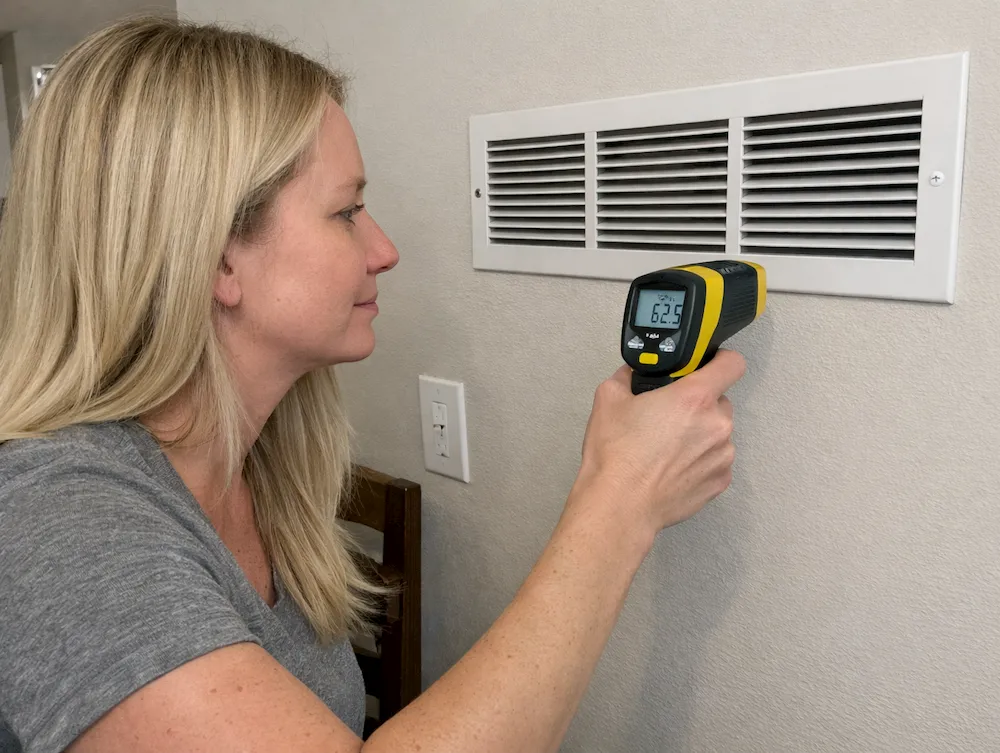
To check this, you can use a simple thermometer.
Measure the temperature of the air coming out of a supply vent, then measure the air in the room.
Subtract the supply temperature from the room temperature. The result is your system’s Delta T.
- If it’s below 16°F, your AC is likely struggling due to issues like low refrigerant or airflow problems.
- If it’s above 22°F, your AC may be working too hard, often because of a dirty air filter or other restrictions.
The Two Key Temperature Differentials You Must Know
Many homeowners get confused between two similar-sounding concepts. Understanding both is crucial for diagnosing comfort issues.
1. The Indoor/Outdoor Load Differential: Your AC’s Work Order
This is the difference between the outdoor temperature and your desired indoor temperature. On a 110°F day, setting your thermostat to 75°F creates a 35°F load differential. The larger this gap, the longer and harder your system must run.
Our extreme Arizona heat means our AC systems naturally face larger load differentials for more of the year than in milder climates. This constant strain is why premium equipment and regular maintenance are necessities for survival.
2. The Delta T: Your AC’s Health Meter
While the load differential is about the ask, the Delta T (ΔT) is about the answer. It measures the actual cooling power your system produces.
A healthy Delta T between 16-22°F means your AC is efficiently absorbing heat from your home’s air. If your Delta T is low, the system is moving air but not properly cooling it, signaling a problem.
Why Is My AC Not Blowing Cold Enough?
If your air isn’t as cold as it should be, you can investigate a few common culprits before calling a pro.
Step 1: Perform the “Delta T” Temperature Check
Gather a digital thermometer or meat probe.
- Find a return air vent and hold the thermometer over it. Record the temperature.
- Find a supply vent (where cold air blows out) and record that temperature.
- Subtract: Return Air Temp – Supply Air Temp = Your Delta T.
Step 2: Identify Common Problems Based on Symptoms
- Low or No Cold Air (Low Delta T): This often points to refrigerant issues (leaks or undercharge), a failing compressor, or a severely dirty evaporator coil. These require professional service.
- Weak Airflow from Vents: This is typically an airflow restriction. The most common fix is replacing a dirty air filter. Also, check that all vents are open and not blocked by furniture.
- System Runs Constantly but Doesn’t Cool: This could be an undersized AC unit struggling against the heat load, or leaky ductwork in your attic losing cool air before it reaches your rooms.
- Uneven Cooling (Some Rooms Hot): This frequently indicates ductwork problems, like leaks, blockages, or an improperly balanced system. It can also be caused by poor insulation or intense sun exposure in specific rooms.
Other Factors Stealing Your Cool
Sometimes, the AC unit itself is fine, but other home inefficiencies overwhelm it.
- Undersized or Oversized Equipment: An AC that is too small will never catch up on a hot day. One that is too large will “short cycle,” turning on and off rapidly without removing humidity, leaving your home clammy. Proper sizing is critical.
- Leaky or Poor Ductwork: Leaky ducts can reduce system efficiency by 20% or more. If your ducts run through a scorching attic, every leak wastes expensive cool air and makes your system work harder.
- Lack of Maintenance: A dirty condenser coil outside, low refrigerant, and worn components all degrade performance. An annual professional tune-up is the best way to prevent this decline.
Salas HVAC Tips for Maximum AC Efficiency
- Set Your Thermostat Wisely: The U.S. Department of Energy recommends 78°F for a balance of comfort and efficiency when you’re home. Using a programmable or smart thermostat to raise the temperature when you’re away can save up to 10% a year on cooling costs.
- Use Fans Strategically: Ceiling fans create a wind-chill effect, allowing you to raise the thermostat a few degrees without sacrificing comfort. Remember, fans cool people, not rooms, turn them off when you leave.
- Seal Your Home: Weatherstrip doors and windows to keep cool air in and hot air out. Ensure your attic has adequate insulation to act as a heat barrier.
- Manage Indoor Heat: Use ovens, dryers, and dishwashers in the early morning or evening. Switch to LED light bulbs, which emit much less heat than incandescent bulbs.
When to Call a Professional HVAC Technician
DIY checks are great, but some problems need an expert. Call a professional like Salas HVAC if you notice:
- A Delta T consistently below 16°F despite a clean filter.
- Uneven temperatures room-to-room that you can’t resolve.
- Unusual noises (hissing, grinding, banging) from the AC or ducts.
- Frequent cycling (constant on/off every few minutes).
- High humidity or moisture indoors while the AC is running.
- No cooling at all.
Quick Guide
Conclusion
Understanding how cold your AC should blow enables you to be in control for your home’s comfort. By checking your Delta T, maintaining your system, and setting your thermostat wisely, you can stay cool during the summer heat.
When those DIY steps aren’t enough, Salas HVAC is here to help.
Stay cool.
Michael