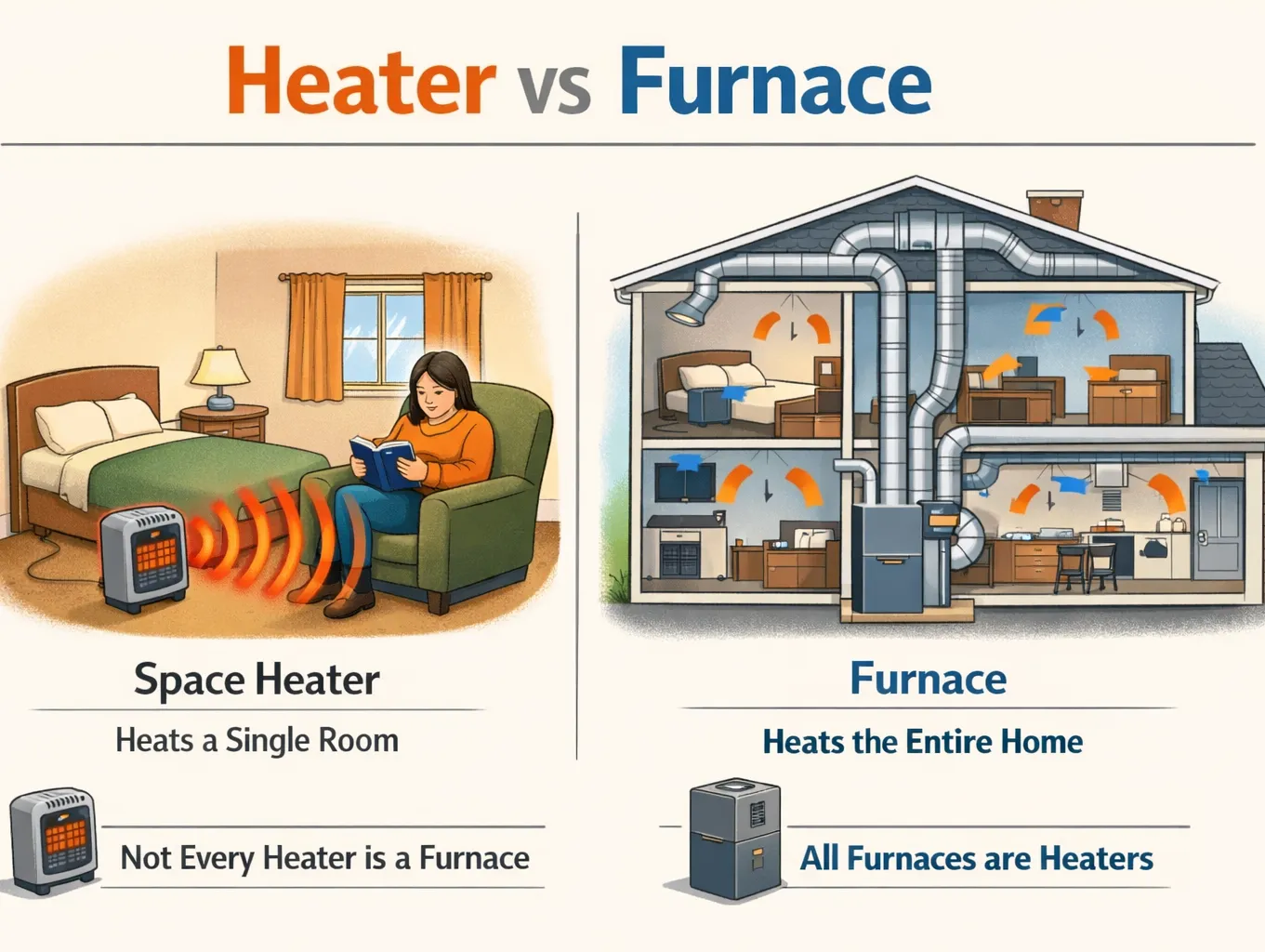
What is the difference between a heater and a furnace? The distinction confuses many Arizona homeowners. Understanding the difference saves money and prevents installation mistakes.
- All furnaces are heaters. Not every heater is as a furnace.
- A furnace heats air at one central spot. Then it blows that air through ducts into every room.
- A heater warms spaces using any technology.
What Is the Difference Between a Heater and a Furnace?
The terms overlap in daily talk. Your neighbor might say they turned on the heater.
They actually started their gas furnace. This casual usage creates confusion when shopping for equipment or calling for repairs.
Defining a Heater (Broad Category)
A heater warms spaces. This category includes many technologies.
Portable Options:
- Electric space heaters
- Quartz infrared heaters
- Oil-filled radiators
- Propane patio heaters
Fixed Installations:
- Baseboard heaters
- Wall-mounted electric units
- Fireplaces and wood stoves
- Radiant floor systems
- Furnaces and boilers
The common thread involves heat creation. The method, fuel source, and distribution vary dramatically.
Defining a Furnace (Specific Heating System)
A furnace heats air at one location. Then it forces that air through ducts. Furnaces always connect to distribution systems. They never sit alone in one room.
Modern furnaces use natural gas, propane, or electricity. Gas models burn fuel in a combustion chamber. Electric models use resistance coils. Both types use blowers to move air through your home’s ductwork.
How Each System Works
Understanding mechanics helps you troubleshoot problems. You also choose better equipment when you know how things work. The operational differences between portable heaters and furnaces are large.
Forced Air Distribution Explained
Furnaces operate on forced air principles. Here is the sequence step by step:
Step 1: Your thermostat detects temperatures below your setting. It signals the furnace control board.
Step 2: The ignition system activates. Gas burners flame on or electric coils heat up.
Step 3: Air from your home flows across the heat exchanger. This metal part moves thermal energy without mixing combustion gases with breathable air.
Step 4: The blower motor pushes warmed air through supply ducts. Vents in each room deliver the heat.
Step 5: Cooler air returns through separate ductwork. The cycle continues until reaching the target temperature.
Step 6: The system shuts down until temperatures drop again.
This circulation maintains even temperatures throughout your home. It also filters air through the return duct filter. This improves indoor air quality.
Fuel Sources and Efficiency Ratings
Furnace efficiency is measured by Annual Fuel Utilization Efficiency (AFUE). This percentage shows how much fuel becomes heat versus escaping as waste.
Current Standards:
- Minimum legal AFUE: 80% (80 cents of every dollar becomes heat)
- Standard efficiency range: 80-83%
- High efficiency range: 90-95%
- Premium condensing furnaces: Up to 98.5%
Electric furnaces achieve 95-100% AFUE ratings. However, electricity costs more per BTU than natural gas in most Arizona markets. High electric rates often offset the efficiency advantage.
Portable electric heaters also achieve near 100% efficiency at the point of use. They convert all electrical energy to heat. The difference lies in distribution. Furnaces heat entire homes efficiently. Space heaters warm only immediate areas.
Cost Comparison: Space Heater vs Furnace
Arizona homeowners face unique cost calculations. Desert winters are mild but nights can drop below freezing. You need reliable heat. You do not need the powerful systems required in Minnesota or Illinois.
Upfront Investment vs Operating Expenses
Portable space heaters cost $25 to $200 at retail. No installation is required. No permits are needed. This low barrier attracts many homeowners.
A new furnace installation ranges from $3,000 to $7,500. The price depends on:
- BTU capacity needed
- AFUE efficiency rating selected
- Ductwork condition
- Gas line accessibility
Operating costs tell a different story over time.
Arizona Utility Rate Calculations
Running the numbers reveals the true cost gaps. Consider a typical Phoenix winter evening at 40°F outside.
Gas Furnace Costs: A standard 80% AFUE furnace burns approximately 1 Ccf (100 cubic feet) of natural gas hourly. At Arizona rates near $1.20 per Ccf, heating your whole home costs roughly $1.20 per hour.
Space Heater Costs: A typical 1,500-watt space heater consumes 1.5 kWh hourly. At Arizona average electric rates of 13 cents per kWh, one heater costs $0.20 per hour. This seems cheaper until you calculate coverage.
One space heater effectively warms 125 to 200 square feet. Heating a 1,500 square foot home requires six to eight units. Operating eight heaters simultaneously costs $1.60 hourly. This exceeds the furnace cost while delivering uneven temperatures.
The Break-Even Point: Space heaters prove economical only when heating one room for short periods. Using them for whole-home heating increases electric bills rapidly.
Which Heating System Fits Arizona Homes?
Climate determines optimal heating choices. Phoenix averages only 564 heating degree days annually. Chicago exceeds 6,500. You need far less heating power in the Valley.
Heating Degree Days in Phoenix and Tucson
Heating degree days measure how much and how long outdoor temperatures drop below 65°F. Lower numbers indicate milder winters.
Arizona Heating Degree Day Totals (Annual):
- Phoenix: 564
- Tucson: 890
- Flagstaff: 6,200 (much higher due to elevation)
- Chicago (comparison): 6,536
This data matters for equipment selection. High-powered furnaces designed for Midwest winters are overkill for Phoenix. Many Arizona homes use heat pumps or smaller furnaces. These systems handle mild winters efficiently while providing summer cooling.
When Portable Heaters Make Sense
Portable units occupy a specific niche. Consider portable units for these Arizona scenarios:
Supplemental Heating: Home offices or bedrooms need occasional warming without heating the entire house.
Guest Rooms: Spaces used infrequently do not warrant duct extension costs.
Garage Workshops: Temporary warming for weekend projects avoids expensive gas line installation.
Rental Properties: Landlords sometimes provide portable units to avoid HVAC infrastructure upgrades.
Always follow safety guidelines. Space heaters cause approximately 1,700 residential fires annually according to the Consumer Product Safety Commission. Keep units three feet from combustibles. Never leave them unattended.
Maintenance and Lifespan Differences
Maintenance requirements differ significantly between system types.
Furnace Maintenance:
- Filter replacement every 1-3 months
- Annual professional inspection of heat exchanger and burners
- Duct cleaning every 3-5 years
- Blower motor lubrication and belt inspection
Space Heater Maintenance:
- Dust removal from intake grilles
- Cord inspection for fraying
- Storage during off-season
Lifespan Expectations: A well-maintained gas furnace lasts 15 to 20 years in Arizona’s mild climate. Electric furnaces often reach 20 to 30 years. Space heaters typically last 3 to 8 years depending on usage quality.
Furnace longevity in Arizona exceeds national averages. Systems experience less strain because they operate fewer hours per year. However, dust accumulation requires vigilant filter changes. Desert particulates clog filters faster than in humid climates.
FAQs
Is a furnace a heater?
Yes. A furnace is a specific type of heater. It falls under the broad category of heating appliances. However, not all heaters are furnaces. The term “heater” includes furnaces, boilers, heat pumps, and portable units.
Can I replace my furnace with space heaters?
You can, but it is usually unwise for whole-home heating. Operating multiple space heaters costs more than running a gas furnace. You also sacrifice safety, air filtration, and even temperatures. Space heaters work best as supplements, not replacements.
What is more efficient in Arizona?
For whole-home heating, natural gas furnaces typically offer lower operating costs than electric resistance heating. Heat pumps provide the best efficiency in Arizona’s mild climate. They move heat rather than generate it, achieving 200-300% efficiency ratings.
How long do furnaces last in desert climates?
Arizona furnaces often last 18 to 25 years. The mild climate reduces wear and tear. National averages suggest 15 to 20 years. Proper maintenance, especially filter changes to combat dust, extends system life greatly.
Sources
Carrier Corporation. “How Do Gas Furnaces Work.” Carrier Residential, 2023. https://www.carrier.com/residential/en/us/products/furnaces/gas-furnaces/how-do-gas-furnaces-work/
CoServ Electric. “Space Heater vs Furnace.” CoServ, 2025.
https://www.coserv.com/space-heater-vs-furnace/
Lawrence Berkeley National Laboratory. “Types of Heating Systems.” Smarter House, 2024. https://smarterhouse.org/heating-systems/types-heating-systems
NOAA Climate Prediction Center. “Heating Degree Day Data Weekly Forecast.” National Weather Service, 2026. https://www.cpc.ncep.noaa.gov/products/analysis_monitoring/cdus/degree_days/hfstwpws.txt