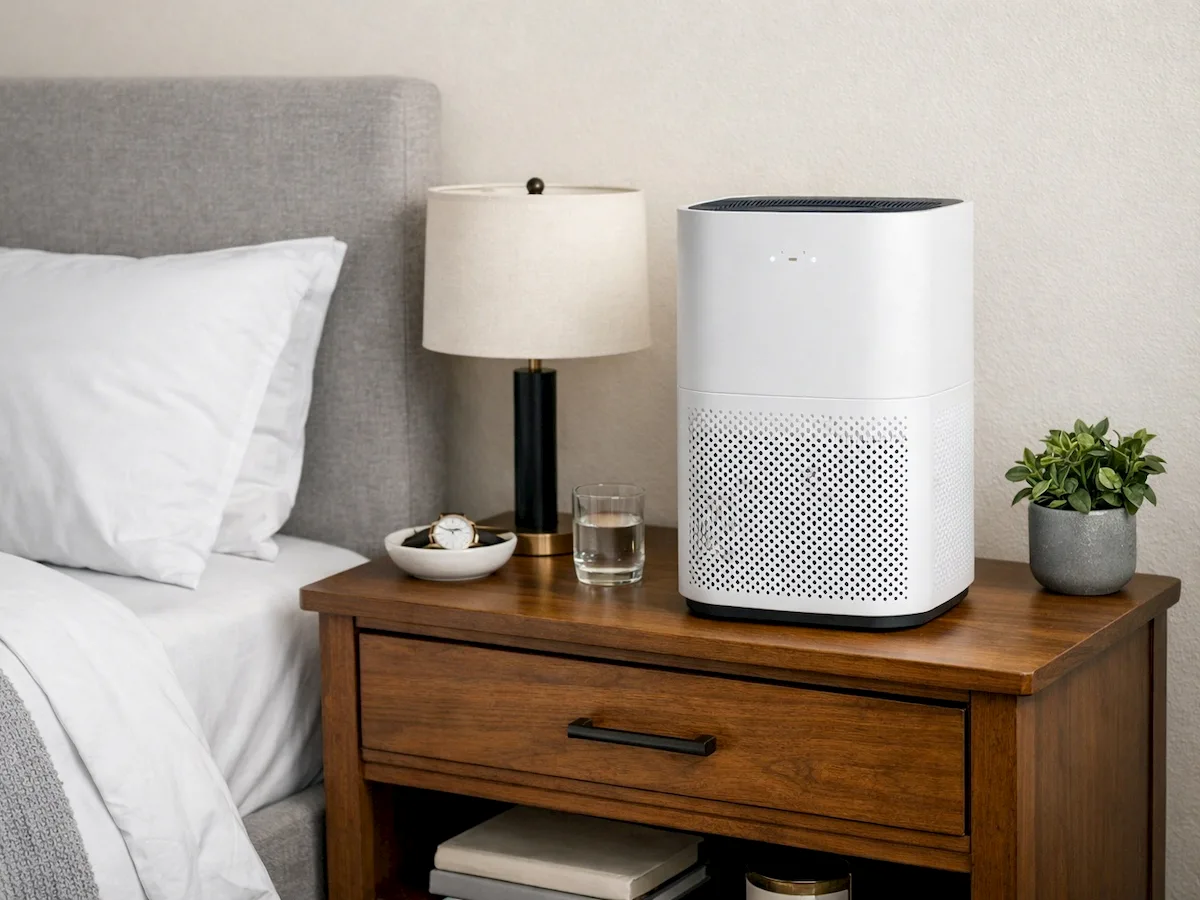
You invested in an air purifier to breathe cleaner air. Where you place your air purifier determines whether you get the full benefits or waste your money.
Setting your air purifier in the wrong spot can reduce its effectiveness by 50% or more, even if you bought a quality unit. Most people put them in corners or against walls where air circulation is weakest. We’ll show you the exact placement formula that maximizes coverage, plus the locations you should absolutely avoid.
Why Air Purifier Placement Matters
Air purifiers work by continuously cycling air through filtration media.
The unit pulls in polluted air, traps contaminants, and releases clean air back into your room. This process requires unrestricted airflow to function efficiently.
Based on the data we collected in Arizona, obstructed airflow can reduce air purifier effectiveness by up to 50%.
That means a $400 unit performs like a $200 unit simply because you placed it behind your couch.
Proper placement ensures your purifier captures pollutants quickly and distributes clean air evenly throughout the space.
Where Should I Place My Air Purifier?
Follow these universal guidelines regardless of room type:
1. Maintain Clearance Around the Unit
Air purifiers need breathing room. Keep at least 6 inches of space from walls and 18 inches from furniture or curtains. Blocked intakes cannot draw sufficient air volume, forcing the motor to work harder while cleaning less air.
2. Position Centrally When Possible
Central locations allow optimal air circulation. Place your unit in the middle of the room rather than tucked against walls. This positioning lets the purifier reach all corners and prevents stagnant air pockets.
3. Face Intakes Toward Pollution Sources
Identify where pollutants originate. Position the air purifier so its intake faces the source while the clean air outlet points toward open living space. This setup captures contaminants at their origin before they spread.
4. Elevate When Appropriate
Many units perform better elevated on tables or stands. Higher placement captures particles at breathing level where they affect you most.
Tower-style units designed for floor placement should stay grounded.
Room-by-Room Placement Guide
Different rooms present unique challenges and pollution sources. Here is how to optimize placement in each space.
Bedroom
You spend roughly one-third of your life sleeping. Bedroom air quality directly impacts your rest and recovery.
- Best location: Place the unit 3 to 6 feet from your headboard, near your nightstand. This positions the purifier to filter exhaled carbon dioxide and capture allergens that disturb sleep.
- Avoid: Do not place units under tables, near heavy drapes, or directly against walls. These positions restrict airflow and reduce effectiveness.
Studies show that bedroom air purifiers can improve sleep quality by 57% and sleep satisfaction by 61%.
Living Room
Living rooms see high traffic and diverse pollution sources including pet dander, dust, and outdoor air infiltration.
- Best location: Position centrally near seating areas. Place beside coffee tables or in open corners with clear airflow paths. Keep the unit at chest height if possible.
- Avoid: Never hide the purifier behind large furniture like sofas or entertainment centers. These obstructions block air circulation and create dead zones where pollutants accumulate.
Kitchen
Cooking generates grease particles, smoke, odors, and volatile organic compounds. Your kitchen needs strategic air purifier positioning.
- Best location: Place the unit 6 to 10 feet from the stove or oven, with the intake facing the cooking area. This captures pollutants at their source before they spread throughout your home.
- Avoid: Keep units away from direct heat and steam sources. High temperatures can damage filters and reduce performance. Do not block the unit with appliances or cookware.
For odor control, choose a unit with activated carbon filtration in addition to HEPA. Carbon adsorbs cooking smells that mechanical filters cannot capture.
Basement
Basements trap moisture, musty odors, mold spores, and dust. These low-airflow environments require special consideration.
- Best location: Elevate the unit on a table or stand to avoid moisture damage. Position centrally or near odor sources like laundry areas or storage spaces.
- Avoid: Do not place directly on concrete floors where moisture can damage electronics. Keep away from walls that may harbor mold growth.
Run the unit continuously on auto mode for best results in humid climates. Consider pairing with a dehumidifier to address moisture issues at their source.
Where Should I Not Place My Air Purifier?
Homeowners typically make these placement mistakes:
| Mistake | Why It Hurts Performance | Solution |
| Tight corners | Restricts intake airflow on multiple sides | Move 2+ feet from any wall |
| Behind furniture | Blocks circulation and creates dead zones | Position centrally with clear sight lines |
| Near HVAC vents | Air interference disrupts purifier airflow patterns | Keep 3+ feet from vents and returns |
| Thick carpeting | Blocks bottom intakes on some models | Elevate on hard surfaces |
| Direct sunlight | Heat can damage filters and electronics | Place in shaded areas |
Should You Move Your Air Purifier Between Rooms?
If you own one portable unit, relocating it throughout the day maximizes coverage. Follow this schedule for single-unit homes:
- Bedroom: 8 hours overnight while sleeping
- Kitchen: 2-3 hours during meal preparation
- Living room: Evening hours when family gathers
However, constantly moving units risks damage and inconsistent air quality. For whole-home protection, consider multiple units or a whole-house system integrated with your HVAC.
Optimizing Whole-Home Air Purification
For comprehensive coverage, combine portable units with HVAC upgrades:
- Install MERV 13 filters in your central system
- Add air purifiers to high-priority rooms, bedrooms, living areas
- Ensure regular filter changes on all units
This layered approach addresses both whole-house air cleaning and targeted problem areas.
FAQs
How far should an air purifier be from the wall?
Maintain at least 6 inches of clearance from walls, preferably 12-18 inches for optimal intake airflow. Units placed directly against walls cannot draw sufficient air volume to clean the room effectively.
Can I place my air purifier on carpet?
Check your unit’s design. Some models draw air through bottom intakes that thick carpet blocks. Elevate these units on hard surfaces or low stands. Tower units designed for floor use can sit on carpet safely.
Should the air purifier face me or away from me?
Position the intake facing pollution sources and the clean air outlet toward open room space. In bedrooms, face the outlet toward your bed so you breathe filtered air, but keep the unit 3-6 feet away to avoid drafts.
Can I put an air purifier next to my TV?
Electronics generate minimal interference, but ensure the purifier has adequate clearance on all sides. Do not block vents with TV stands or shelving. Prioritize airflow over convenience.
Is it better to have one large purifier or multiple small ones?
Multiple smaller units typically provide better coverage than one large unit. Air purifiers clean the room they occupy. A single large unit cannot effectively filter air in distant rooms or around corners.
Final Thoughts on Air Purifier Placement
Proper placement can transform an average air purifier into a highly effective clean air system. Remember these key principles:
- Central positioning over corner placement
- Clearance matters more than aesthetics
- Face intakes toward pollution sources
- Elevate units when appropriate
- Match unit capacity to room size
At Salas HVAC, we help homeowners achieve optimal indoor air quality through proper equipment selection and placement.
If you need guidance positioning portable units or want to explore whole-home solutions, our team ensures you breathe the cleanest air possible.
Breathe easy,
Michael