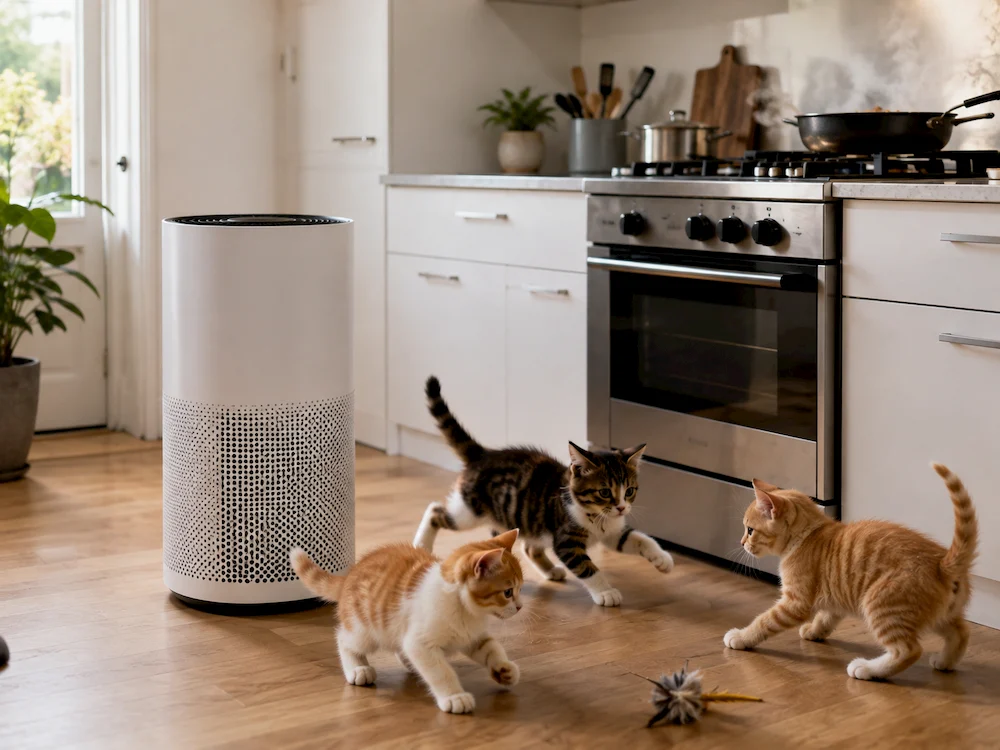
Air purifiers can remove bad smells, but not all models work equally.
Air purifiers with activated carbon filters effectively eliminate odors by trapping gas molecules, while HEPA-only units cannot remove bad smells.
How Air Purifiers Remove Bad Smells
Understanding how odors work helps explain why certain air purifiers succeed where others fail.
The Science of Odor Molecules
Odors consist of volatile organic compounds (VOCs) in gaseous form. These gas molecules disperse rapidly through air and measure much smaller than solid particles like dust or pollen.
Common odor sources include cooking byproducts, pet dander bacteria, cleaning chemicals, paint fumes, and mold spores.
Gas molecules move at higher speeds than solid particles.
They slip through standard filters designed to catch larger airborne contaminants.
Why HEPA Filters Alone Fail
HEPA filters excel at capturing particles as small as 0.3 microns, including 99.97% of dust, pollen, mold spores, and pet dander.
However, HEPA technology wasn’t designed to trap gases. Odor molecules are significantly smaller than 0.3 microns and pass straight through HEPA fiber mazes.
HEPA filters improve overall air quality by removing particles that may carry odors, like pet hair or mold spores.
But they cannot capture the gaseous compounds that create persistent smells.
You need additional filtration technology specifically designed for gas removal.
Activated Carbon Filters Target Smells
Activated carbon provides the critical technology that removes odors from indoor air. This specialized filter material works through a unique chemical process.
How Adsorption Works
Activated carbon removes smells through adsorption, not absorption.
Gas molecules stick to the carbon surface as air passes through the filter. This chemical bonding traps odor molecules permanently inside the filter’s pore structure.
Adsorption differs from absorption like a magnet differs from a sponge.
Rather than soaking up liquids, activated carbon’s porous surface attracts and holds gas molecules through chemical attraction.
Surface Area Matters
One pound of activated carbon contains surface area equivalent to 100 football fields.
Millions of microscopic pores create this massive surface for trapping gases, chemicals, and VOCs.
Carbon filter quality varies significantly between products.
Pelleted or granular carbon filters provide more surface area than carbon-impregnated fabrics.
Budget air purifiers often use thin carbon layers that saturate quickly and lose effectiveness within weeks.
Types of Smells Air Purifiers Remove
Air purifiers with proper carbon filtration handle specific odor types effectively. Knowing which smells respond best helps set realistic expectations.
1. Pet Odors
Pet smells come from dander, fur, urine, and accidents.
Air purifiers capture both the particle components, like dander and hair, through HEPA filters and gaseous odors through carbon filters. This dual action makes them particularly effective for pet owners.
Litter box odors, wet dog smell, and general pet mustiness all respond well to air purification.
However, you must still clean surfaces where odors accumulate. Air purifiers work on airborne smells, not odors embedded in carpet or furniture.
2. Cooking Smells
Fish, fried foods, strong spices like curry, and burned meals create persistent kitchen odors. Activated carbon filters adsorb the grease particles and organic compounds that cause these smells.
Running an air purifier during and after cooking prevents odors from spreading throughout your home.
Kitchen air purifiers work best when positioned near cooking areas. They capture odor molecules before they settle into fabrics and walls.
3. Smoke and Tobacco
Cigarette smoke, cigar smoke, and fireplace odors contain both particles and gases. HEPA filters capture smoke particles while carbon filters adsorb the gaseous compounds responsible for lingering tobacco smell.
Smoke presents challenges because it penetrates fabrics and surfaces deeply. Air purifiers can significantly reduce airborne smoke odors but cannot eliminate smoke embedded in furniture, curtains, or walls.
You need both air purification and deep cleaning for complete smoke odor removal.
4. Mold and Mildew
Musty odors indicate mold and mildew growth. Air purifiers capture airborne mold spores through HEPA filters while carbon filters absorb the VOCs mold releases. This combination reduces the musty smell and prevents spore circulation.
Air purifiers address symptoms but not root causes.
You must fix moisture problems and remove existing mold growth for permanent solutions. Proper humidity control prevents future mold development.
5. Chemical Fumes
Paint, adhesives, cleaning products, and new furniture release VOCs that create chemical odors. Activated carbon excels at trapping these compounds. Air purifiers help during painting projects, after using harsh cleaners, or when bringing new furniture home.
Strong chemical fumes can overwhelm carbon filters quickly. Open windows for initial ventilation, then use air purifiers for remaining odors.
What Air Purifiers Cannot Remove
Air purifiers have limitations. Understanding what they cannot do helps set realistic expectations and prevents disappointment.
1. Strong Surface-Based Odors
Air purifiers only remove airborne odors. They cannot extract smells embedded deep in carpet, upholstery, drywall, or wood. If spilled milk soaked into your carpet pad, an air purifier won’t help. You need professional carpet cleaning to remove the odor source.
Surface cleaning must accompany air purification. Remove odor sources first, then use air purifiers to capture remaining airborne molecules.
2. Extremely Volatile Compounds
Some gases react too quickly or are too small for carbon filters to capture effectively. Carbon monoxide, for example, requires specialized detectors and immediate action, not air purifiers.
Natural gas leaks also exceed air purifier capabilities and demand emergency response.
The EPA states that no air cleaner eliminates all particles causing strong odors. Air purifiers work best as supplementary tools alongside proper ventilation and source removal.
Best Filter Combinations for Odor Control
The most effective air purifiers for odor removal combine multiple technologies. Each component targets different aspects of smell elimination.
HEPA Plus Carbon
This combination provides comprehensive odor control. HEPA filters capture particles that carry odors, including pet dander, mold spores, and cooking particles.
Carbon filters then adsorb the gaseous compounds creating actual smells.
Look for substantial carbon filter thickness. Thin carbon sheets saturate quickly and need frequent replacement.
Quality units feature several pounds of activated carbon providing months of odor control.
Bipolar Ionization Technology
Bipolar ionization breaks down odor molecules by releasing ions into the air. These ions attach to odor particles and neutralize them through oxidation. This technology is maintenance-free and works alongside HEPA and carbon filters.
Bipolar ionization reduces odors rather than trapping them like carbon filters do. Using both technologies provides faster, more complete odor removal than either alone.
Avoid ionizers that produce ozone, which irritates airways and creates health risks.
Choosing the Right Air Purifier for Smells
Selecting an air purifier requires matching unit capabilities to your specific needs. Three factors determine effectiveness for odor control.
Room Size Matters
Air purifiers are rated for specific square footage. Using a unit designed for 200 square feet in a 400-square-foot room provides inadequate air processing. Match the purifier’s coverage rating to your room size or choose a larger unit for better performance.
Measure your room dimensions before shopping. Open floor plans require higher-capacity units than the square footage alone suggests.
Air Changes Per Hour
ACH (air changes per hour) indicates how many times the purifier filters all room air per hour. For odor control, aim for ACH ratings of 4-6 times per hour.
Higher turnover rates capture emerging odors faster, preventing smell buildup.
Cooking areas and pet spaces benefit from higher ACH ratings. Bedrooms can function with lower rates since odor generation is minimal.
Carbon Filter Weight
More activated carbon provides longer-lasting and more effective odor removal. Quality air purifiers contain 5-15 pounds of activated carbon.
Budget models may use less than one pound, resulting in frequent filter replacement and poor performance.
Check manufacturer specifications for carbon weight. This detail often appears in technical documentation rather than marketing materials.
Proper Placement and Maintenance
Even the best air purifier fails if positioned incorrectly or maintained poorly. Follow these guidelines for maximum odor removal.
Where to Position Units
Place air purifiers 3-5 feet from walls with unrestricted airflow around the unit. Position them in rooms where odors originate, like kitchens, pet areas, and smoking rooms. Running units in clean rooms away from odor sources wastes their capacity.
Elevating units slightly off the floor improves air circulation. Avoid corners and behind furniture where airflow becomes restricted. Strategic placement maximizes odor capture.
Filter Replacement Schedule
Carbon filters have finite capacity. As pores fill with trapped gases, effectiveness decreases until filters stop working entirely. Replace carbon filters every 3-6 months depending on odor levels and usage hours.
HEPA filters typically last 6-12 months. Some units include filter change indicators. Others require manual tracking.
Mark your calendar when installing new filters to ensure timely replacement. Your HVAC system filters need similar attention for whole-home air quality.
When Air Purifiers Work Best
Air purifiers deliver best results when used strategically. They function as part of a comprehensive odor management approach, not standalone solutions.
Combine air purification with these practices for maximum effectiveness: Remove odor sources immediately (dispose of trash, clean pet accidents, ventilate after cooking). Open windows periodically for fresh air exchange.
Clean surfaces regularly where odors accumulate. Maintain proper humidity levels to prevent mold and mildew. Address moisture problems that create musty smells.
Air purifiers provide continuous background odor control between deep cleaning sessions. They prevent odor buildup rather than fixing severe existing problems. For best results, establish good cleaning habits then add air purification to maintain freshness.
Breathe well,
James Mahoney
Co-Owner, Salas HVAC
FAQs
How long does it take an air purifier to remove bad smells?
Light odors clear within 1-2 hours of continuous operation. Moderate smells may take 4-8 hours. Severe odors embedded in surfaces may take days of continuous operation while also cleaning affected materials.
Can air purifiers remove smoke smell completely?
Air purifiers effectively remove airborne smoke particles and gaseous odors. However, they cannot extract smoke embedded in furniture, carpets, walls, and other porous surfaces. Complete smoke odor removal requires both air purification and professional deep cleaning of affected surfaces.
Do cheap air purifiers work for odors?
Cheap air purifiers with minimal activated carbon provide limited odor control. They may reduce light smells temporarily but lack capacity for persistent or strong odors. Budget units typically contain thin carbon layers that saturate quickly, requiring frequent expensive filter replacements that eliminate initial cost savings.
Will an air purifier remove cigarette smell from my apartment?
Yes, but with limitations. Air purifiers with carbon filters remove airborne cigarette smoke and odors. However, tobacco smoke penetrates fabrics, walls, and HVAC ducts deeply. You need both air purification and thorough cleaning to eliminate entrenched cigarette odors completely.
Can I use essential oils in my air purifier for better smell?
Never add essential oils or any liquids to air purifiers unless specifically designed for that purpose. Oils damage filters and void warranties. Most units don’t support oil diffusion. If you want both air purification and pleasant scents, use a separate essential oil diffuser alongside your air purifier.