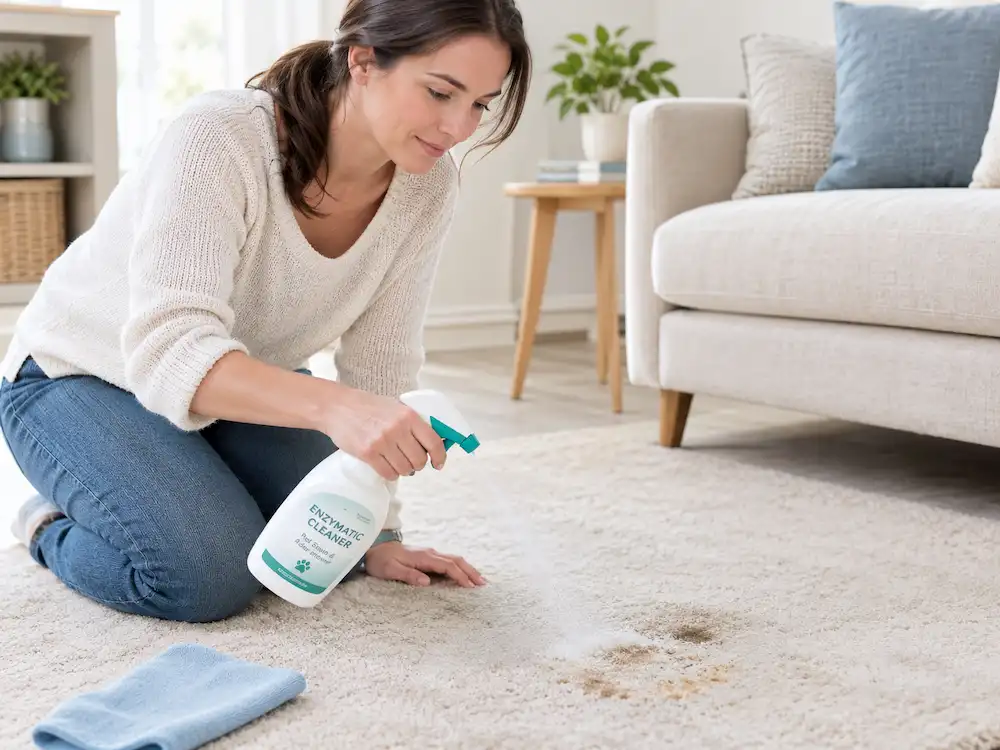
You love your cat, but the smell in your home tells a different story. Cat odors build up over time, even with regular cleaning. The good news is that removing these smells doesn’t require expensive services or harsh chemicals.
The key to eliminating cat odors is understanding why they persist and using the right cleaning methods. We cover seven proven techniques to help you quickly target the source of cat odors.
Why Cat Odors Are So Difficult to Remove
Cat odors present unique challenges that set them apart from other household smells. Understanding these challenges helps you choose cleaning methods that work.
The Science Behind Cat Urine Smell
Cat urine contains several compounds that create its distinctive odor. The main components include urea, urobilin, uric acid, sodium, creatinine, pheromones, and typically five different strains of bacteria.
When urine dries, bacteria break down the urea into ammonia.
This creates the sharp smell most people associate with cat accidents. As decomposition continues, thiols form and intensify the odor significantly.
Uric acid is the real culprit behind persistent cat smells.
This crystalline compound doesn’t evaporate or break down like other urine components. When humidity rises, uric acid crystals reactivate and release odors again.
Why Regular Cleaners Fail
Most household cleaners can’t break down uric acid. Soap, vinegar, baking soda, ammonia, chlorine, and hydrogen peroxide only neutralize odors temporarily.
These products clean up other urine components but leave uric acid intact.
Using the wrong cleaner can make the problem worse.
Traditional household cleaners can “set” cat urine stains, making them nearly impossible to remove later.
Cats have 200 million scent receptors compared to 5 million in humans, so they can still smell their accidents even when you can’t.
Use Enzymatic Cleaners for Permanent Odor Removal
Enzymatic cleaners are the only products that permanently eliminate cat odors. These specialized formulas break down the chemical bonds in cat urine that cause persistent smells.
How Enzyme Cleaners Work
Enzyme cleaners contain bacteria that produce enzymes when they contact organic matter like urine, feces, or vomit.
The enzymes break down uric acid at the molecular level, eliminating the smell source rather than covering it up.
The cleaning process continues as long as organic matter remains. This biological breakdown removes ammonia crystals and other bacteria that contribute to odors.
Best Application Methods
Proper application makes enzyme cleaners more effective. Blot fresh accidents immediately with paper towels to remove as much liquid as possible.
Saturate the affected area completely with enzyme cleaner, extending beyond the visible stain by several inches.
Allow the cleaner to sit for at least 15 minutes, or overnight for old stains.
For severe odors on carpet, place a damp towel over the treated area for 1-2 hours to enhance enzymatic activity. Extract excess liquid with a wet vacuum or clean cloth after treatment.
Never mix enzyme cleaners with vinegar, lemon juice, or other household products. These combinations deactivate the enzymes and make the cleaner ineffective.
Clean Litter Boxes Daily to Prevent Odors
Litter box maintenance is your first line of defense against cat odors. A clean box prevents many accidents that lead to household smells.
Optimal Litter Box Placement
Location affects how often cats use their litter boxes correctly. Place boxes in quiet, low-traffic areas away from noisy appliances like washing machines. Avoid corners or tight spaces where cats feel trapped.
Keep boxes on every floor of your home for multi-level houses. Cats prefer not to travel long distances when they need to go, especially older cats with mobility issues.
How Many Litter Boxes You Need
The standard recommendation is one box per cat, plus one extra. This formula prevents territorial issues and ensures clean options are always available.
Scoop boxes at least once daily and deep clean weekly. Open, uncovered boxes work better than covered ones because they don’t trap odors that discourage use. Replace litter completely once a month and scrub the box with pet-safe cleaners.
Remove Cat Hair and Dander Weekly
Cat hair and dander contribute significantly to household odors. These particles accumulate in corners, float through air, and settle on surfaces throughout your home.
Vacuum With HEPA Filters
HEPA filters capture small particles that regular vacuums recirculate back into the air. Vacuum all floors, carpets, and furniture at least once weekly, focusing on areas where your cat spends time.
Use rubber gloves dampened with water to wipe fabric surfaces before vacuuming. This technique helps lift embedded hair from couches and chairs. Reducing household dust also minimizes odor-trapping particles.
Wash Soft Surfaces Regularly
Cat bedding, blankets, and favorite lounging spots need weekly washing. These items absorb oils and odors from your cat’s skin and fur. Use pet-safe detergents in warm water, and consider adding enzymatic laundry boosters for stubborn smells.
For upholstered furniture, sprinkle baking soda on surfaces and let it sit overnight. Vacuum thoroughly the next day. Spray a 50/50 mixture of water and white vinegar on fabrics between deeper cleanings.
Improve Indoor Air Quality With Proper Ventilation
Stagnant air intensifies cat odors and allows them to penetrate surfaces. Good air circulation removes smells and prevents them from settling into your home.
Open Windows for Fresh Air Exchange
Opening windows creates natural air flow that carries odors outside. Fresh outdoor air dilutes indoor smells and prevents them from becoming concentrated. Aim for cross-ventilation by opening windows on opposite sides of your home when weather permits.
Regular air exchange also removes pet allergens that contribute to stuffy, unpleasant indoor environments. Even 15-20 minutes of fresh air daily makes a noticeable difference.
Use Air Purifiers With Activated Carbon
Air purifiers with activated carbon filters effectively remove pet odors from indoor air. Carbon filters adsorb odor molecules and trap them, preventing smells from circulating. Quality air purifiers also capture pet dander and hair that contribute to odors.
Place air purifiers in rooms where your cat spends the most time. Run them continuously for best results.
Your HVAC system also plays a role in maintaining clean indoor air, so change your AC filter regularly and consider upgrading to higher-efficiency options.
Deep Clean Overlooked Areas
Cat odors seep into surfaces you might not think to clean regularly. These hidden areas harbor smells that regular maintenance misses.
Walls and Ceilings
Paint absorbs odors over time, especially in homes with multiple cats. Clean walls and ceilings at least annually with a solution of equal parts white vinegar and warm water, plus one tablespoon of dish soap. Use a mop or long-handled sponge for hard-to-reach areas.
For stubborn odors absorbed into paint, spray a fine mist of enzymatic cleaner on affected areas. Avoid soaking walls to prevent paint damage. Allow surfaces to air dry completely.
Furniture and Upholstery
Cat trees, carpeted shelves, and scratching posts accumulate significant odors. These items see constant use and require regular attention. Vacuum all carpeted cat furniture weekly and treat with enzymatic spray monthly.
Clean under and behind furniture where hair and dander collect. Move heavy pieces quarterly to clean hidden areas thoroughly. Replace extremely soiled cat furniture that cleaning can’t salvage.
Address the Root Cause of Accidents
Eliminating existing odors is only part of the solution. You need to understand why your cat has accidents outside the litter box.
Medical Issues in Cats
Urinary tract infections, kidney disease, and diabetes can cause inappropriate urination. Cats with these conditions may have more dilute urine or increased urgency.
Schedule a veterinary visit if your cat suddenly starts having accidents. Medical problems require treatment beyond cleaning. Older cats may need additional litter boxes on each floor due to mobility challenges.
Behavioral and Stress Factors
Multi-cat households often experience territorial spraying and litter box avoidance. Stress from changes in routine, new pets, or loud noises can trigger accidents.
Ensure each cat has their own resources, including food bowls, water dishes, and litter boxes. Consider pheromone diffusers to reduce anxiety. Spaying or neutering reduces marking behavior significantly.
FAQs
Can air purifiers remove cat odors completely?
Air purifiers with activated carbon filters effectively reduce airborne cat odors but don’t eliminate smells from surfaces or fabrics. You need to combine air purification with thorough surface cleaning for complete odor removal.
How long does cat urine smell last without treatment?
Untreated cat urine can smell indefinitely because uric acid crystals remain active in affected materials. The crystals reactivate when exposed to humidity, releasing odors repeatedly until you use enzymatic cleaners to break them down permanently.
Does vinegar permanently remove cat urine smell?
Vinegar neutralizes cat odor temporarily but cannot break down uric acid crystals. The smell returns when humidity reactivates the crystals. Only enzymatic cleaners permanently eliminate cat urine odors by destroying the chemical compounds that cause them.
Why does my whole house smell like cat litter?
Your home likely smells like cat litter due to insufficient litter box cleaning, too few boxes for multiple cats, or poor ventilation. Scoop boxes daily, provide one box per cat plus one extra, and improve air circulation with fans or open windows.
Can cat odors affect my HVAC system?
Cat dander and hair can clog HVAC filters and spread odors throughout your home via air ducts. Change your AC filter every 30-60 days in homes with cats, and consider having ducts professionally cleaned if odors persist.