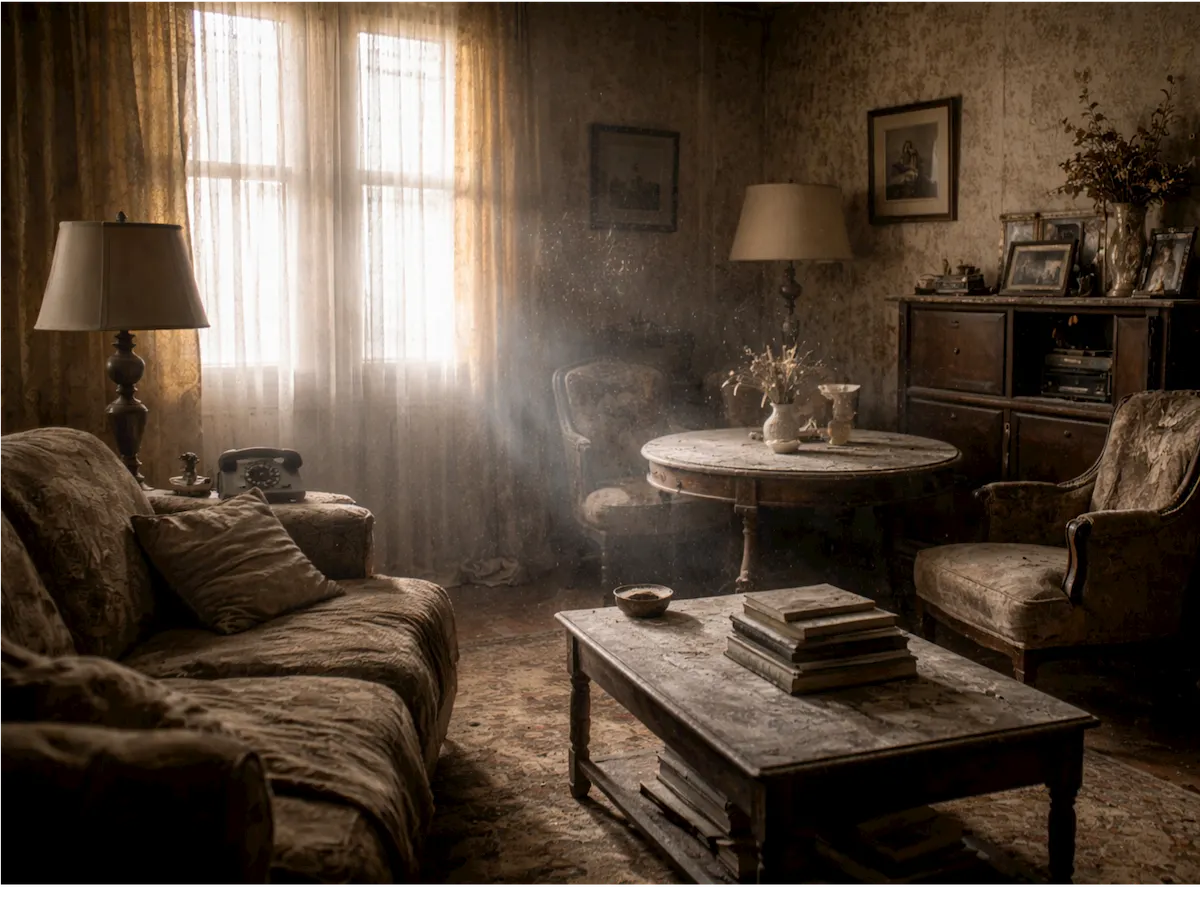
That distinctive musty odor in older homes comes from decades of accumulated dust, mildew in hidden spaces, and off-gassing from aging materials.
Simple air fresheners just mask the problem while the underlying causes continue damaging your home and health. We’ll walk you through the exact sequence that eliminates the old house smell permanently, starting with the one spot everyone misses.
What Causes Old House Smell?
That distinctive musty odor in older homes results primarily from microscopic organisms breaking down and releasing gases. Scientists call these emissions microbial volatile organic compounds, or mVOCs for short.
When mold, bacteria, and biofilm colonies decay, they release these gaseous compounds into your indoor air.
Your nose detects these molecules as that unmistakable old, musty, or stale smell that pervades older properties.
Research shows that approximately 50% of homes in the United States have moisture problems that create environments where mold thrives.
Mold and Mildew as the Primary Source
Mold grows best in dark, damp areas with limited air circulation. Older homes tend to have less ventilation than modern construction, which traps moisture and creates perfect conditions for mold colonization.
The organisms establish themselves in hidden spaces like wall cavities, under flooring, in attic insulation, and inside HVAC ductwork. You often cannot see the mold itself, but you smell the gases it releases as it grows and decays.
Basements, crawl spaces, and attics are the most common breeding grounds. These areas typically have higher humidity and less regular air exchange than living spaces. Even without visible water damage, trapped moisture creates ongoing mold problems.
Other Contributors to Old House Odor
Decaying building materials add their own smell over time. Old wood, deteriorating insulation, and aging adhesives release compounds as they break down. These mix with mVOCs to create the complex odor profile of an old house.
Accumulated dust, pet dander, and dirt trapped in carpets and upholstery contribute additional odors. Smoke residue from decades of cigarette use soaks into walls, ceilings, and fabrics where it continues releasing smell for years.
Stagnant water in unused drains creates biofilm that produces sulfur compounds with a rotten egg smell. Dirty or clogged HVAC systems recirculate odor particles throughout your home every time the system runs.
But how do you get rid of that old house smell for good?
Find the Source of the Smell First
You cannot eliminate old house smell without identifying where it originates. Start your investigation in areas most prone to moisture and mold growth.
Check Problem Areas for Moisture and Mold
Inspect your basement or crawl space first. Look for water stains, efflorescence (white powder on concrete), condensation on pipes, or visible mold growth. Feel walls and floors for dampness.
Check behind and under sinks in kitchens and bathrooms. Remove items from cabinets and shine a flashlight on all pipes and connections. Look for water damage, soft spots in cabinetry, or musty smells concentrated in these areas.
Examine your attic for roof leaks, inadequate ventilation, or condensation on rafters. Wet insulation harbors mold and loses its effectiveness, creating additional moisture problems.
Pull back carpeting in corners and along walls to check the subfloor underneath. Water damage to flooring creates ongoing odor problems even after the surface appears dry.
Inspect Your HVAC System and Ductwork
Your heating and cooling system can be a major odor source or distributor. HVAC systems with dirty filters, clogged condensate drains, or moldy ductwork spread contaminated air throughout your entire home.
Check your air filter first. A dirty filter reduces airflow and allows dust and mold spores to accumulate in your system. Replace filters every 1 to 3 months depending on your home’s conditions.
The condensate drain line removes moisture from your AC system. When this line clogs, water backs up and creates standing water where mold grows. Pour a cup of white vinegar down the drain line quarterly to prevent buildup.
Consider hiring an HVAC professional to inspect your ductwork with a camera. Dust, debris, and mold can accumulate inside ducts where you cannot see or reach them. At Salas HVAC, we find that duct cleaning often eliminates 30% to 40% of persistent home odors.
Increase Ventilation Throughout Your Home
Fresh air exchange is your most powerful tool against old house smell. Stagnant air allows moisture and odors to concentrate and worsen over time.
Open Windows and Use Fans Strategically
Open windows on opposite sides of your home to create cross-ventilation. This pushes contaminated indoor air out while pulling fresh outdoor air through your living spaces.
Run box fans in windows to increase airflow. Position fans facing outward to actively push stale air outside. Leave this setup running for several hours daily when weather permits.
Use ceiling fans year-round to keep air moving. Set them to counterclockwise in summer to push air down, and clockwise in winter to pull warm air from the ceiling. Moving air prevents moisture from settling and accumulating in corners and against walls.
Direct sunlight into your home whenever possible. UV rays naturally kill mold, bacteria, and other microorganisms that produce odors. Open curtains and blinds during daylight hours to take advantage of this free disinfection.
Install Exhaust Fans in Problem Areas
Bathrooms and kitchens generate the most indoor moisture. Exhaust fans remove this humid air before it can condense and create mold problems.
Run bathroom fans during showers and for 20 to 30 minutes afterward. This removes the moisture that would otherwise soak into walls, ceilings, and flooring. If your bathroom lacks a fan, install one as a priority home improvement.
Kitchen exhaust hoods should vent to the outside rather than recirculating air. Run the hood fan while cooking and for 15 minutes after to remove moisture and food odors before they settle into your home.
Consider installing a whole-house ventilation system if your home has chronic moisture and odor problems. These systems continuously exchange indoor air with filtered outdoor air, maintaining consistent air quality. Modern ventilation systems include heat recovery to prevent energy waste.
Deep Clean Every Surface and Hidden Space
Odor molecules stick to every surface in your home. A thorough cleaning removes the accumulated dirt, dust, and residue that holds smells.
Clean Walls, Baseboards, and Trim
Mix a cleaning solution of half a cup of borax dissolved in 32 ounces of hot water, then add 2 cups of distilled white vinegar and 16 ounces of hydrogen peroxide. This combination removes grease, dust, mildew, and embedded odors from painted surfaces.
Wipe down all walls starting from the ceiling and working downward. Use a sponge or microfiber cloth, changing to clean cloths frequently. Let walls air dry completely before replacing furniture or hanging pictures.
Clean baseboards, door frames, window sills, and all wood trim with the same solution. These areas accumulate dust and absorb odors but rarely get attention during routine cleaning.
Wash or replace switch plates and outlet covers. These small surfaces accumulate surprising amounts of grime and odor over years of use.
Address Carpets, Furniture, and Fabrics
Carpet traps more odor than any other surface in your home. The fibers and padding underneath absorb moisture, dust, and organic particles that create persistent smells.
Sprinkle baking soda liberally over all carpeted areas. Use at least one full box per large room. Let it sit for 8 hours or overnight before vacuuming thoroughly. The baking soda neutralizes acidic odor molecules and absorbs moisture.
Steam clean carpets or hire a professional carpet cleaning service. Hot water extraction removes dirt and contamination that vacuuming misses. For severe odor problems, consider replacing old carpeting entirely.
Wash all curtains, drapes, and removable fabric items. These absorb cooking odors, smoke, and general mustiness. Take delicate items to a dry cleaner. Replace items that cannot be adequately cleaned.
Upholstered furniture requires special attention. Vacuum thoroughly, then treat with an upholstery cleaner or baking soda. For furniture with removable cushion covers, wash them according to care labels. Consider professional furniture cleaning for pieces with embedded odors.
Don’t Forget Appliances and Fixtures
Pull out your refrigerator, stove, washer, and dryer to clean behind and underneath them. These spaces accumulate years of dust, food particles, and lint that produce odors and reduce appliance efficiency.
Clean refrigerator coils with a coil brush or vacuum attachment. Dirty coils make your fridge work harder and can harbor odors. Wipe down all surfaces inside and outside the appliance.
Run a cleaning cycle on your washing machine with white vinegar or a commercial washer cleaner. Front-loading machines particularly need regular cleaning to prevent mold in door seals.
Check all drain traps under sinks and in floor drains. Pour hot water down infrequently used drains to prevent biofilm buildup. Add a half cup of baking soda followed by vinegar to bubble away organic matter.
Control Humidity Levels
Humidity control is the single most effective long-term solution for old house smell. Mold cannot grow when humidity stays below 50%.
Use Dehumidifiers in Damp Areas
Dehumidifiers extract moisture from indoor air and collect it in a reservoir or drain it away. Place units in basements, crawl spaces, and any room that feels damp or shows condensation on windows.
Set your dehumidifier to maintain 30% to 50% relative humidity. Most units have built-in humidistats that automatically cycle on and off to maintain your target level. Empty collection reservoirs daily or connect a drain hose for continuous operation.
Size your dehumidifier appropriately for the space. A 30-pint unit works for small rooms up to 1,500 square feet. Larger basements need 50-pint or 70-pint capacity. Undersized units run constantly without effectively reducing moisture.
Fix Leaks and Improve Insulation
Water intrusion creates ongoing moisture problems that no amount of cleaning can fix. Inspect your home’s exterior for gaps in siding, damaged flashing around chimneys, or cracks in foundation walls.
Repair roof leaks immediately. Even small leaks allow moisture to saturate insulation and wooden framing where it creates hidden mold growth. Check your attic after heavy rains to catch new leaks early.
Improve basement waterproofing if you see recurring moisture issues. This might involve exterior excavation to apply waterproof membranes, installing interior drainage systems, or adding sump pumps.
Upgrade insulation in crawl spaces and exterior walls to reduce condensation. Cold surfaces collect moisture from indoor air. Proper insulation keeps surfaces warmer and prevents this condensation.
Seal gaps around windows, doors, and where utilities enter your home. These openings allow humid outdoor air to enter during summer months. Use weatherstripping, caulk, or expanding foam as appropriate.
Use Natural Odor Absorbers
After cleaning and addressing moisture sources, odor absorbers help neutralize remaining smells while preventing new odors from developing.
Baking Soda for Fabrics and Carpets
Baking soda neutralizes odors through chemical reactions with acidic compounds. Place open boxes in closets, under sinks, and in any enclosed spaces where odors concentrate.
Create sachets by filling small fabric bags with baking soda and a few drops of essential oil. Place these in drawers, closets, and storage areas. Replace every 2 to 3 months for continuous odor control.
Sprinkle baking soda inside shoes, trash cans, and other items that develop odors between cleanings. The powder absorbs moisture and neutralizes smells without leaving residue.
Activated Charcoal Bags
Activated charcoal works through physical absorption rather than chemical reactions. Millions of tiny pores in the carbon trap odor molecules from the air.
Place charcoal bags in closets, under beds, in cabinets, and anywhere air circulation is limited. The bags continue working for months without needing replacement.
Recharge charcoal bags monthly by placing them in direct sunlight for a few hours. This releases trapped odors and restores absorption capacity. Quality bags last 2 years with proper recharging.
White Vinegar Solutions
White vinegar neutralizes alkaline odors and cuts through greasy residue. Place bowls of white vinegar around your home overnight to absorb lingering smells. The vinegar odor dissipates within hours, taking other odors with it.
Mix equal parts vinegar and water in a spray bottle for a general-purpose odor neutralizer. Spray on fabrics, into the air, or on hard surfaces. Test on a small area first to ensure it does not damage the material.
Use vinegar in your laundry by adding a cup to the rinse cycle. This removes musty smells from clothing, towels, and linens without leaving a vinegar scent after drying.
Paint Walls and Replace Old Materials
Sometimes surface cleaning cannot reach deeply embedded odors. Replacing or sealing affected materials provides a permanent solution.
Use Odor-Blocking Primers and Paints
Standard paint allows odors from walls to bleed through over time. Odor-blocking primers seal in smells and prevent them from returning.
Apply a stain-blocking primer like Kilz or Zinsser BIN to all walls and ceilings. These products contain shellac or other resins that create a vapor barrier over contaminated surfaces. Let the primer dry completely before applying finish paint.
Some newer paints include odor-eliminating technology. Products like Sherwin Williams SuperPaint with Air Purifying technology claim to reduce volatile organic compounds and household odors. These work best in combination with proper primer.
Clean walls thoroughly before priming and painting. Primers seal in existing contamination but work best on clean surfaces. Remove loose paint, patch holes, and wash walls with a TSP solution.
When to Replace Carpet and Flooring
Carpet older than 10 to 15 years has likely absorbed more odor than cleaning can remove. The padding underneath holds moisture and odors that surface treatments cannot reach.
Remove old carpet completely, including all tack strips and padding. Inspect the subfloor for water damage, stains, or visible mold. Clean the subfloor with an enzyme-based cleaner before installing new flooring.
Consider hard flooring alternatives like luxury vinyl plank, tile, or hardwood. These materials do not trap odors and remain easier to keep clean than carpet.
For wood floors with embedded odors, sand them down to bare wood and refinish. This removes the contaminated surface layer. In severe cases, you might need to replace damaged boards or treat the subfloor with a sealant.
Maintain Fresh Air Long-Term
Old house smell returns if you do not maintain the conditions that keep it away. Develop habits that prevent moisture accumulation and maintain good air quality.
Regular HVAC Maintenance
Change your air filters on schedule. Mark your calendar for filter changes every 1 to 3 months depending on your home’s conditions. Homes with pets, allergies, or high dust need monthly changes.
Schedule professional HVAC maintenance annually. Technicians clean coils, check refrigerant levels, clear condensate drains, and identify problems before they cause damage or odors.
Air purifiers with HEPA filters and activated carbon remove airborne particles and odors. Place units in rooms where you spend the most time. Run them continuously for best results.
Ongoing Cleaning and Ventilation Habits
Open windows weekly even in winter to exchange indoor air. Brief ventilation prevents moisture and odors from building up over time. Ten to fifteen minutes provides significant benefit without excessive heat or cooling loss.
Wipe down surfaces prone to moisture accumulation. Clean bathroom tiles, shower doors, and sink areas after use. Squeegee shower walls to remove water before it can cause mildew.
Run exhaust fans every time you shower or cook. This single habit prevents most residential moisture problems. Leave fans running an extra 20 minutes after you finish to completely remove humidity.
Monitor humidity levels with an inexpensive hygrometer. If humidity rises above 50%, run dehumidifiers or increase ventilation until it drops back to the ideal range.
Address moisture problems immediately when they appear. A small leak today becomes a major mold problem in weeks. Quick action prevents odor issues before they establish themselves.
FAQs
What is old house smell called?
Old house smell is a musty, stale odor associated with older buildings.
How long does it take to get rid of old house smell?
Mild old house smell can improve within 1 to 2 weeks of increasing ventilation and deep cleaning. Moderate cases take 4 to 6 weeks of consistent effort. Severe odors from extensive mold growth may require 2 to 3 months of remediation, including professional mold removal and material replacement.
Can old house smell make you sick?
Prolonged exposure to mVOCs can cause headaches, respiratory irritation, and allergy-like symptoms in sensitive individuals. The mold and bacteria producing these compounds pose greater health risks than the odor itself, especially for people with asthma, allergies, or compromised immune systems.
Will painting walls get rid of old house smell?
Painting alone masks odors temporarily but does not eliminate the source. You must use an odor-blocking primer like Kilz or Zinsser BIN before painting. These primers seal contaminated surfaces and prevent odors from bleeding through.
Does baking soda remove old house smell?
Baking soda neutralizes acidic odor molecules and absorbs moisture. Sprinkle it on carpets, upholstery, and in enclosed spaces. Let it sit overnight before vacuuming. Baking soda works well for light to moderate odors but cannot replace addressing the underlying moisture and mold issues.
What humidity level prevents mold and old house smell?
Maintain indoor humidity between 30% and 50% to prevent mold growth and old house smell. Mold cannot thrive when humidity stays consistently below 50%.
Should I hire a professional for old house smell?
Hire professionals when DIY methods fail after 4 to 6 weeks, when you find extensive mold growth (more than 10 square feet), or when you suspect contamination inside walls or HVAC systems. Mold remediation specialists have equipment and expertise to address problems regular homeowners cannot reach.
Can HVAC systems cause old house smell?
Yes, dirty HVAC systems are a common source of old house smell. Mold grows in condensate drains, on cooling coils, and inside ductwork. The system then distributes these odors throughout your entire home.
Why not get rid of that old house smell and breathe easy,
Michael