Learn how this simple safety device can protect your Phoenix home from costly water damage.
You’ve had a long day. After fighting Phoenix traffic on the I-10 and squeezing in a stop at the grocery store, you finally get home. The moment you step through the door, something feels wrong. There’s a squishing sound beneath your feet. Your carpet is soaked.
You follow the dripping sounds and stop cold. Your living room ceiling has partially collapsed. Wet drywall is scattered across your furniture, and water is still pouring through what used to be an intact ceiling.
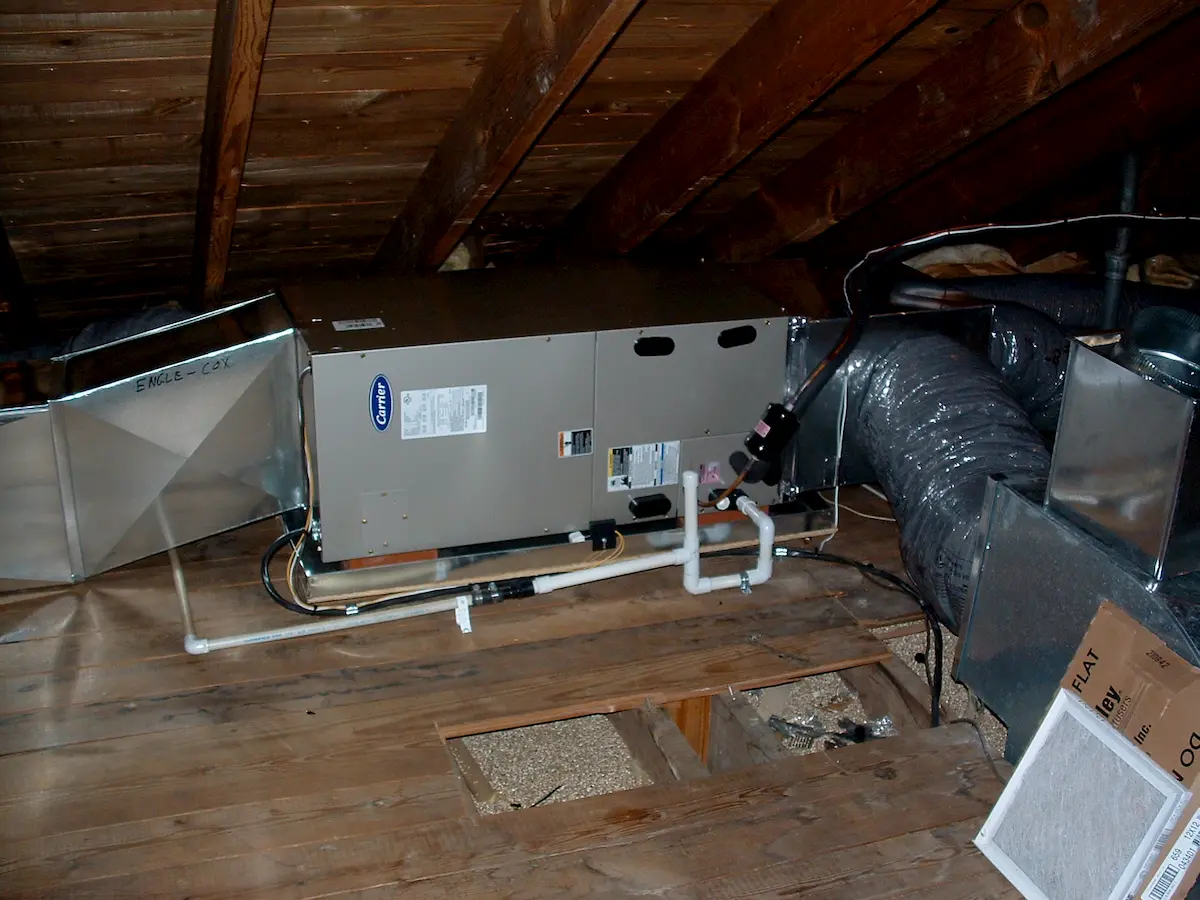
Your mind races. No rain today. No burst pipes visible. Then it clicks: your air conditioning unit sits directly above this area in the attic. A closer look confirms it. Water is overflowing from the AC system and saturating everything below.
Could this have been prevented? Yes, completely. Understanding how your AC manages water is where that protection starts.
The Good News: This Disaster Is Completely Preventable
Water damage from an overflowing AC drain is one of the most common and most avoidable home repair emergencies Salas Heating and Air responds to across the Phoenix metro. The right equipment, properly installed, stops this problem before it starts.
How Your AC System Handles Water
Most Phoenix homeowners think of their AC as purely a cooling machine, but it’s also pulling significant moisture from the air every single day.
Even in the desert, condensation builds up inside your system and collects in drain pans hidden within the unit.
Daily Water Removal
During Arizona’s monsoon season, when humidity spikes unexpectedly, a residential AC system can remove 15-25 gallons of water from indoor air each day.
Even during the dry season, condensation accumulates consistently. All of that water routes through your system’s drain lines into your home’s plumbing, typically through a bathroom drain or plumbing vent stack.
Primary Drainage
Your AC’s primary drain line is the main channel for this water. When it’s clear and functioning, you’ll never think about it.
When it clogs, the drain pan fills up fast. Without somewhere to go, that water overflows directly onto your attic floor, then through your ceiling.
Backup Protection
Arizona building codes require a secondary drain pan beneath every attic-mounted AC system precisely because primary drain failures are so common.
This secondary pan catches overflow from the primary system and buys you time, but it’s still just a collection point. If both systems fail, there’s nothing between that water and your ceiling.
Why Both Primary and Secondary Drains Fail
Having two drain systems sounds like solid protection, and it is a good starting point, but both lines can and do clog. In the Phoenix area, Salas Heating and Air sees this regularly, especially in homes that haven’t had professional drain cleaning in over a year.
Biological Buildup in Drain Lines
Think of your drain pans the way you’d think of an untreated swimming pool. Leave it alone long enough and you get algae, slime, and bacterial growth.
The same thing happens inside AC drain pans, with one important difference: pool water drains into a large, open basin.
Your AC drains through narrow PVC pipes with multiple turns, traps, and bends. Those restrictions make blockages nearly inevitable once organic growth begins.
How Arizona’s Off-Season Accelerates the Problem
Phoenix winters are mild enough that many homeowners switch entirely to heating for months at a time. During that stretch, any moisture left in your drain lines sits stagnant and slowly hardens into calcium-like mineral deposits, a common issue given Arizona’s notoriously hard water.
When AC season kicks back in, new biological growth forms right on top of those mineral layers. The result is a blockage that’s nearly impossible to clear without professional equipment.
Once a drain line clogs this way, it will clog again without proper treatment. Regular maintenance helps, but it doesn’t cover the gaps when you’re at work, on a trip to Sedona, or simply asleep.
The Float Switch Solution: Your 24/7 Smart Water Sentinel
An AC float switch is a compact electronic sensor that monitors your system for rising water. The moment it detects abnormal water backup in your drain pan or line, it cuts power to the entire air conditioning system.
No AC means no more moisture being pulled from the air, which means no more water feeding an already-clogged drain.
Why Shutting Off the AC Is Actually the Right Call
Yes, in Phoenix summer heat, losing your AC gets your attention fast. That’s exactly the point. When a float switch cuts your system, you know within hours at most.
You call Salas Heating and Air, we clear the drain, and you’re back up and running, usually the same day. Compare that to the alternative: water silently pooling in your attic for days until your ceiling gives out.
Protection Benefits
- Stops catastrophic water damage before it reaches your ceiling
- Protects flooring, drywall, insulation, and personal property
- Operates automatically around the clock, no monitoring required
- Gives you peace of mind when traveling or away from home
- Can help maintain homeowner’s insurance compliance
- A fraction of the cost of a single water damage claim
Available Options
Float switches come in several configurations designed for different AC setups and homeowner preferences. The most common types include pan-mounted clip-on sensors, in-line drain pipe sensors, and magnetic float detection units.
More advanced options include wireless alert systems that send smartphone notifications, dual-switch configurations for layered redundancy, and smart home integrations that tie into platforms like Google Home.
Professional vs. DIY Installation
Homeowners comfortable with basic electrical work can install certain float switch models themselves.
That said, professional installation by a licensed Salas Heating and Air technician ensures proper placement, correct wiring to your specific system, and full integration with your existing thermostat or control board.
Given the stakes, most Phoenix homeowners find the installation cost well worth the added assurance.
Investment vs. Protection: What the Numbers Say
A professionally installed float switch typically runs $150 to $300. The average water damage repair from an AC drain overflow in the Phoenix area runs $10,000 to $20,000 once drywall, insulation, flooring, and structural repairs are factored in.
Many homes Salas services already have a float switch installed, often added by a previous owner who learned about their value the hard way. If you’re unsure whether your system has one, ask us during your next maintenance visit. We can inspect and confirm during any standard tune-up.
A float switch is a single layer of protection, not a replacement for regular maintenance. Keeping your drain lines professionally cleaned and treated is still the first line of defense. The float switch handles the moments when clogs happen faster than scheduled service can catch them.
Don’t Wait
Water damage from a clogged AC drain is sudden, expensive, and deeply disruptive. In Phoenix homes where attic-mounted units are the norm and summer heat runs relentlessly for months, the risk is real every season.
A float switch won’t make your drain lines maintenance-free, but it will make sure a clogged drain never turns into a collapsed ceiling.
Contact Salas Heating and Air today to schedule a float switch installation or to have your existing system inspected.
FAQs
Can I install an AC float switch myself?
You can, but we do not recommend it. Incorrect wiring can damage your AC’s control board. More importantly, improper placement like in the primary drain or an unlevel installation can make the switch ineffective, giving you a false sense of security while water damage occurs.
How much does it cost to install or replace a float switch?
A replacement float switch itself costs between $15 and $40. With professional labor for installation or replacement, total costs typically range from $100 to $250.
My switch trips constantly. What does this mean?
Frequent tripping is a red flag. It usually indicates a chronic drain line clog, an incorrectly sloped drain pipe, or a failing condensate pump if your system has one. It signals that your drainage system needs a professional cleaning and inspection to identify the root cause.
Protect your Phoenix home today with professional float switch installation
Serving Phoenix and the Greater Arizona Valley. Licensed, Local, and Ready to Help.
Stay cool,
Michael